


THE HISTORY
The story behind the founding of the Icelandic Museum of Rock ’n’ Roll goes back quite some time. The idea of creating a museum dedicated to objects and memorabilia from the history of Icelandic popular music had been discussed for several years before Stuðmenn rented the restaurant Sigtún on Suðurlandsbraut for two weeks over Christmas and New Year in 1984.
There, in collaboration with film director Óskar Jónasson, they set up a temporary pop memorabilia exhibition. Stuðmenn then held a televised dance on New Year’s Eve, inviting various dignitaries and public figures, including Marshall Brement, the United States Ambassador to Iceland, and Evgeniy A. Kosarev, the Soviet Ambassador to Iceland. The two ambassadors were called up on stage and asked to sing Nótt í Moskvu together.
When the two weeks came to an end, all the pop memorabilia was packed away or returned to its owners. There were no immediate plans to repeat the project, but the seed had been planted.
When restaurateur Tómas Tómasson opened Hard Rock Café in Kringlan on 25 July 1987, he received various items, instruments, clothing and other memorabilia from Hard Rock’s headquarters in the United States. Hard Rock restaurants were known for the collecting passion of their owner, who acquired pop memorabilia and instruments and displayed them in restaurants around the world.
At first, the items on display were all connected to international pop icons. Before long, however, Hard Rock in Reykjavík began receiving gold records from Icelandic musicians, along with various objects and memorabilia that were displayed at the restaurant. Although this was a welcome development, many wanted to go even further and establish a museum or centre dedicated to preserving the history of Icelandic pop music.
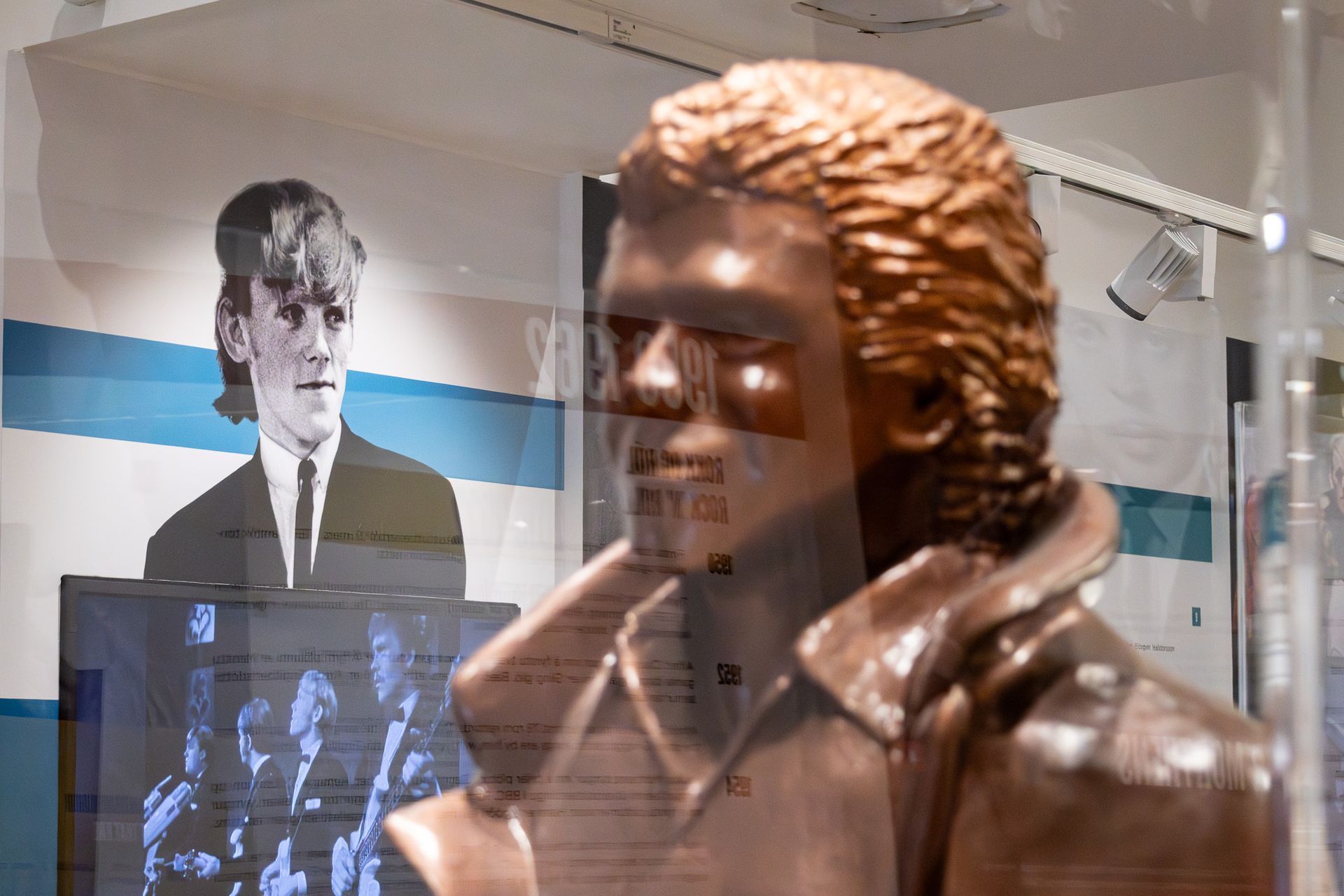
The idea emerged among musicians from Keflavík to create an exhibition in their hometown that would celebrate its status as the “Beatle Town.” Hljómar were among the first Beatles-inspired bands in Iceland, and in their wake came several more such bands from the Suðurnes region. This was considered quite remarkable, and people soon began referring to Keflavík as Bítlabærinn - the Beatle Town - comparing it to Liverpool in England.
A working group was formed on the initiative of Kjartan Már Kjartansson, who was then the principal of the Keflavík Music School. The group began preparing the exhibition Bítlabærinn Keflavík and enlisted Jón Sigurðsson to seek financial support from companies and benefactors.
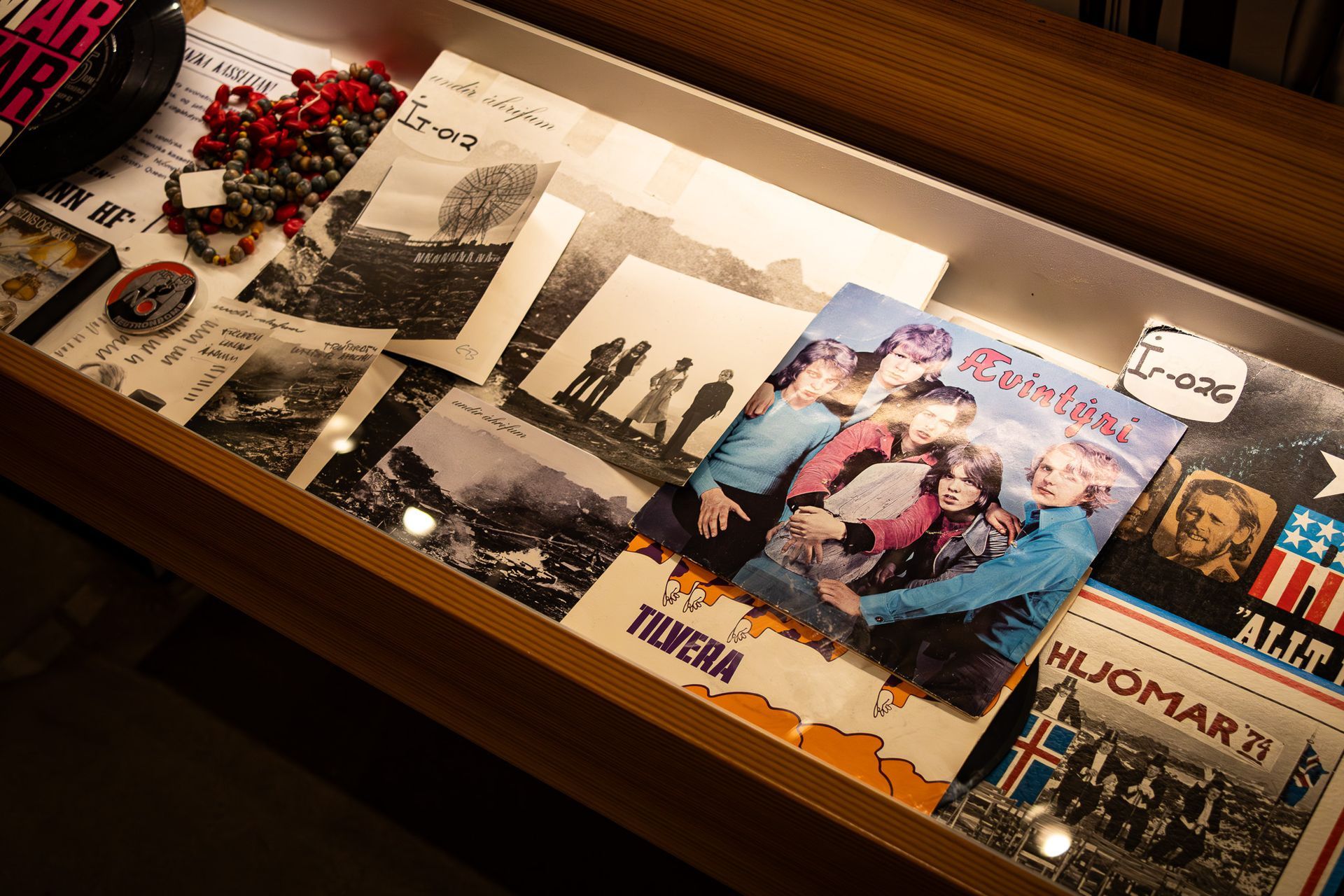
The exhibition opened across both floors of the restaurant Glóðin, at Hafnargata 62 in Keflavík, on Saturday, 11 October 1997. It was dedicated to musicians connected to the Suðurnes region — people who had left their mark on Icelandic popular music between 1963 and 1976. The exhibition was based on newspaper clippings, posters, record sleeves, accounting documents, equipment, instruments and various other items that had been collected.
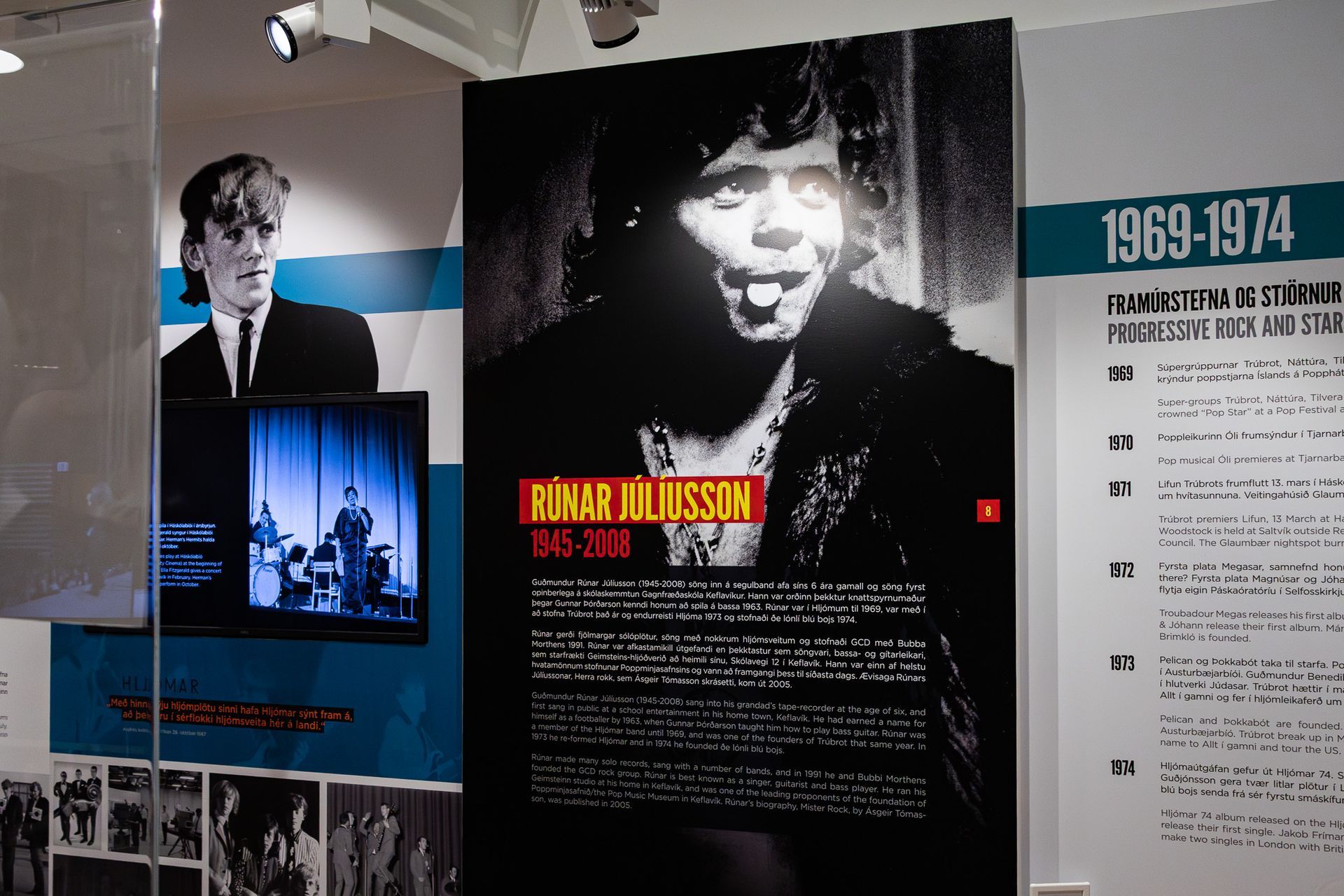
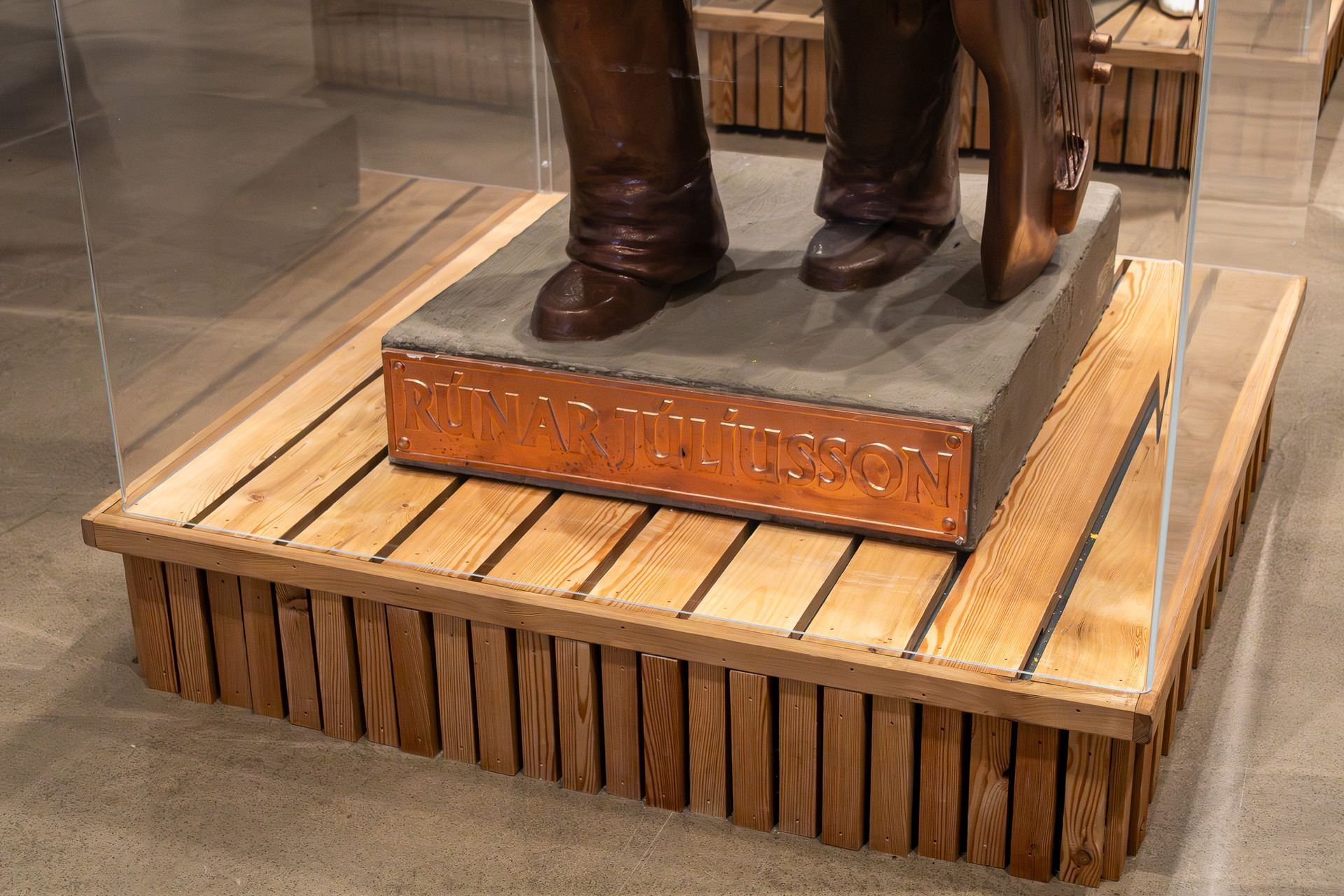
In addition to Kjartan Már, those behind the initiative included musicians Rúnar Júlíusson and Guðmundur Hermannsson, restaurateur Stefán Viðarsson, interior architect Bryndís Eva Jónsdóttir, exhibition designer Björn G. Björnsson and lyricist Þorsteinn Eggertsson. It is no exaggeration to say that Rúnar Júlíusson was one of the driving forces behind making the exhibition a reality. He enjoyed strong support from Kjartan Már, who has continued to support the museum with both advice and dedication ever since. The preparation period was relatively short — just over six months before the exhibition opened.
Poppminjasafn Íslands received its national ID number in May 1997 and was formally established in 1998. At first, its home and legal venue were at the restaurant Glóðin in Keflavík, where the exhibition Bítlabærinn Keflavík remained on display for several years. The restaurant’s menu featured various dishes with names that referenced pop history.
A new website was launched on 5 October 2003, on the 40th anniversary of Hljómar. It stated that the Reykjanesbær Heritage Museum was responsible for Poppminjasafn Íslands and would receive all objects and memorabilia connected to pop history. The website was intended to raise awareness of the museum and encourage the preservation and collection of items related to Icelandic music. It also served as a platform for those interested in learning about the history of Icelandic pop music, with the aim of documenting that history in the future.
In March 2004, news emerged of a proposal to build a music and conference centre beside Félagsheimilið Stapi in Ytri-Njarðvík. Árni Sigfússon, then mayor of Reykjanesbær, presented the idea at public meetings held across the municipality. It was stated that the Reykjanesbær Music School would be at the heart of the building’s activities, and that the centre would also provide facilities for choirs and music groups. Plans also included a large space for the pop memorabilia museum within the building.
While residents discussed the possibility of creating a home for the pop memorabilia museum and the music school in a new cultural building, a new pop exhibition was organised. The exhibition Stuð og friður opened at Duus Museum Houses on 17 June 2005. It focused on the period from 1969 to 1979, which began with a spirit of radicalism and the fight for a better world.
Flower children were prominent at the beginning of the period, and all kinds of experimentation took place in music as well as in the use of mind-expanding substances. After 1973, however, the emphasis began to shift. Lighter forms of music came to the fore, including glam rock, disco, jazz rock and popular music. Towards the end of the period, further changes arrived with the emergence of punk and new wave.
The exhibition was designed by Ólafur Engilbertsson. He had turned his attention to exhibition design and had, among other projects, organised the exhibition Humar eða frægð at the Reykjavík Art Museum – Hafnarhús and Spitz Gallery in London. That exhibition was created to celebrate the 16th anniversary of the record label Smekkleysa in 2003.
The exhibition Vagg og velta, rokkárin á Íslandi opened on 31 March 2007 at Duus Museum Houses. Through text and images, it explored the early years of rock music in Iceland, which began in earnest in the spring of 1957.
Rock music was a major challenge to Icelandic society, which was changing from a farming society into an urban one, with all the challenges that came with it. This new musical wave was referred to in Icelandic as vagg og velta, as well as rugg og ról or rokk og ról, the latter of which eventually became the established term.
During this period, the generation gap became a reality, and the concept of teenagers or youth became firmly established. The exhibition remained open until 2009 and was the last exhibition held under the name Poppminjasafn Íslands, as the name was changed to Rokksafn Íslands when Hljómahöll opened.
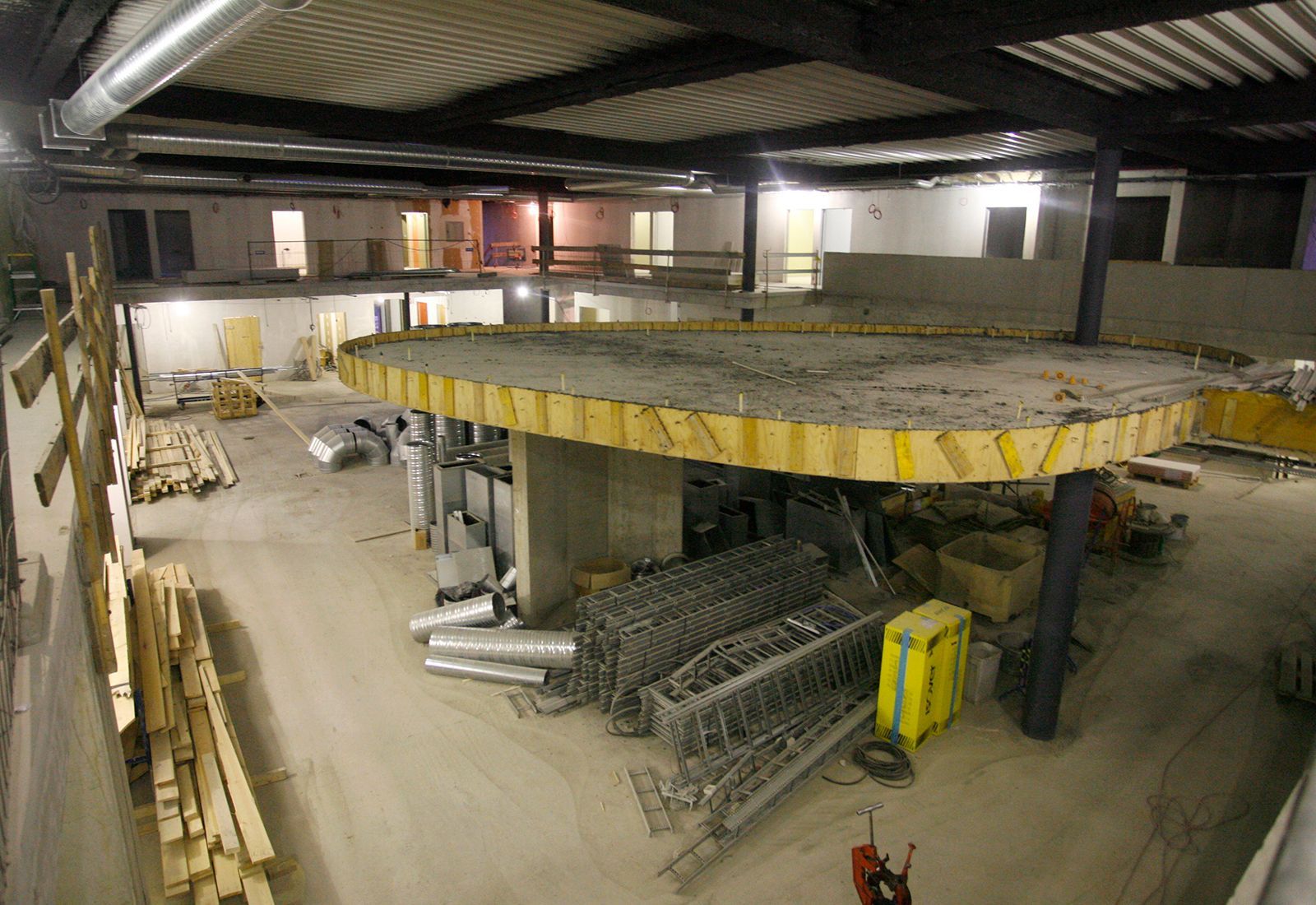
A preparatory group worked on a needs analysis for the new building. It was expected that the school would accommodate 600 students, and that the pop memorabilia museum would be given a substantial space within the building. Study trips were made abroad to examine how pop music museums were structured, after which work began on planning and designing the building.
The new Hljómahöll was designed by Guðmundur Jónsson, an architect based in Norway who had, among other projects, designed Viking World. Guðmundur had extensive experience in designing cultural buildings in the Nordic countries and presented a number of highly interesting ideas on how digital and interactive technology could be used in varied ways.
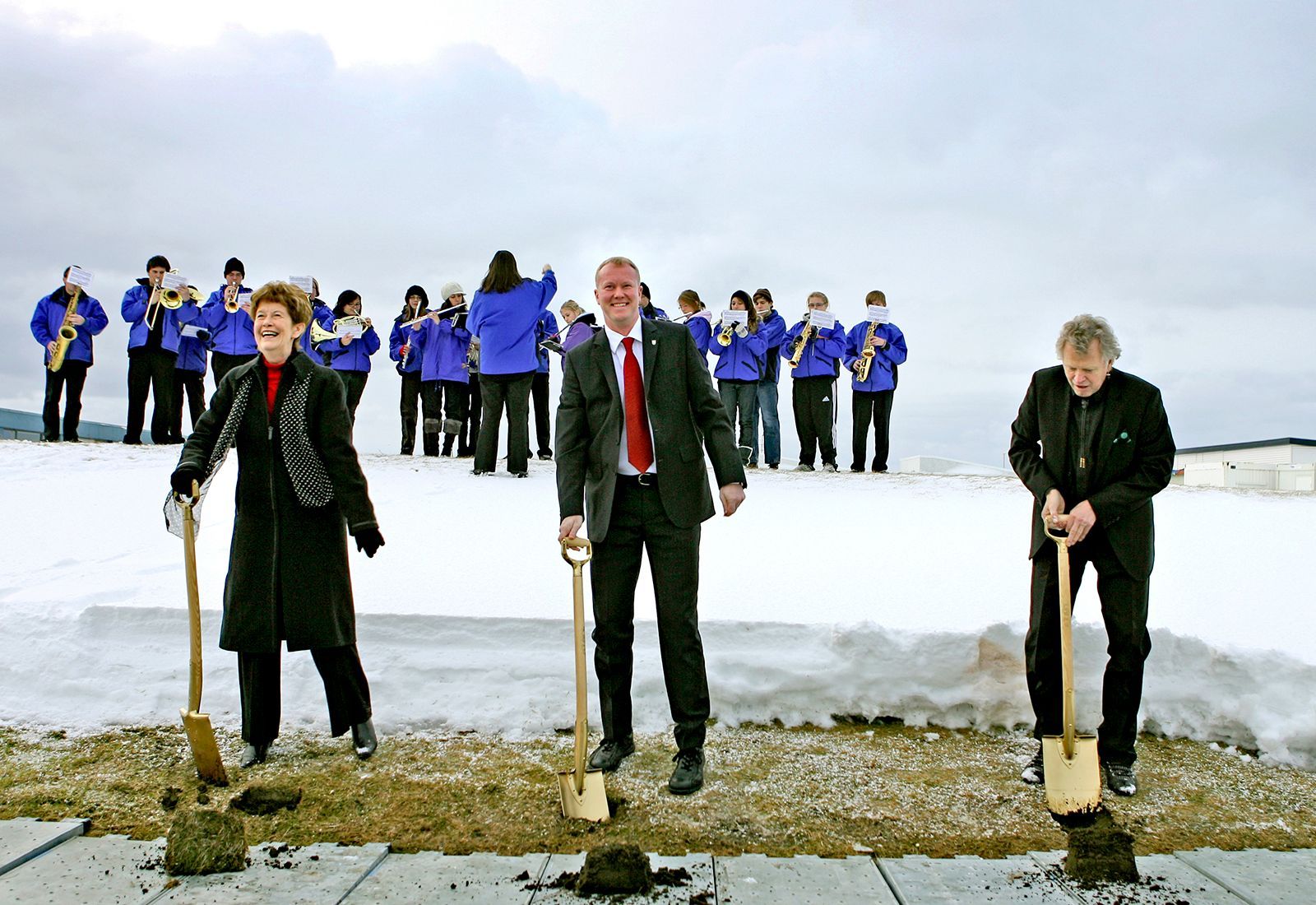
The software company Gagarín was hired to work on that part of the project, while THG Architects supervised and oversaw all construction work on the building. The project was managed by Samúel Guðmundsson, a construction engineer. Haraldur Árni Haraldsson, principal of the Reykjanesbær Music School, served as project manager on behalf of Reykjanesbær. The first sod was turned on 26 January 2008 by music teacher Ragnheiður Skúladóttir, Rúnar Júlíusson and Böðvar Jónsson.
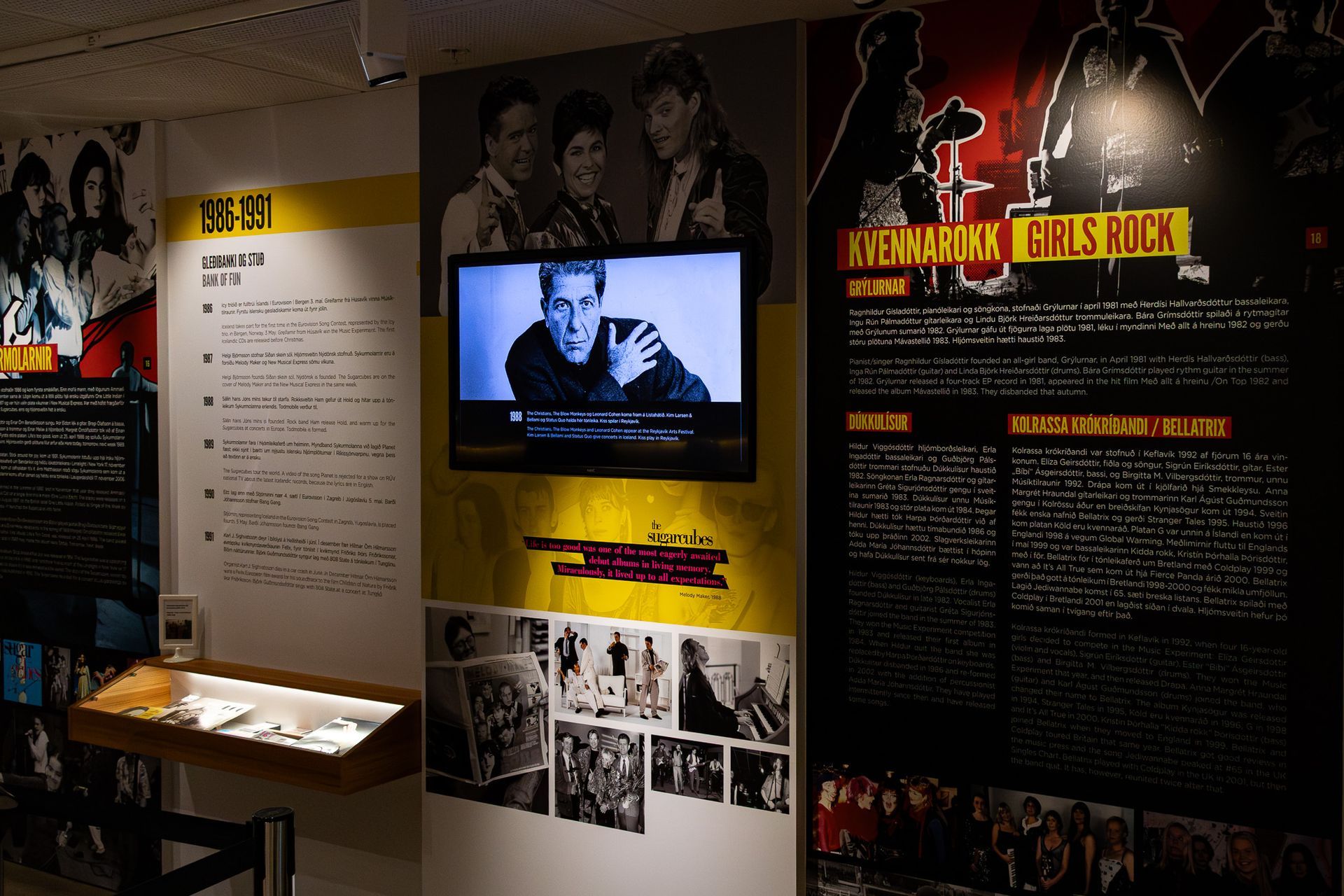
Among those involved in the preparatory and concept group for Hljómahöll, which met regularly, were Jakob Frímann Magnússon and Rúnar Júlíusson, one of the main driving forces behind the project. Jónatan Garðarsson was hired to document the history of Icelandic pop music, write the texts intended for the future museum and draft the museum’s first exhibition.
At this stage, Rúnar and Jónatan worked closely together, and Björn G. Björnsson soon joined the group. Björn was hired to plan and install the exhibition itself, as he had extensive experience in this field. When Rúnar passed away suddenly in December 2008, he and Jónatan were in the midst of preparing the collection of pop memorabilia and artefacts.
Rúnar’s passing was a heavy blow to everyone involved, but it also convinced those working on the project that they must not lose momentum. Instead, they were determined to honour Rúnar’s memory by completing the work and bringing the pop memorabilia museum into Hljómahöll.
When the preparatory group visited pop music museums abroad, they noticed how many of them featured enclosed, windowless spaces where interactive multimedia content could be used effectively. This was one of the elements that architect Guðmundur strongly emphasised in his conceptual work.
There was considerable discussion about whether it would be possible to create holograms of Hljómar, allowing visitors to take part in their musical performance and then receive a recording of the performance to take home. A Norwegian company with the technical capability to make this a reality was considered for the project.
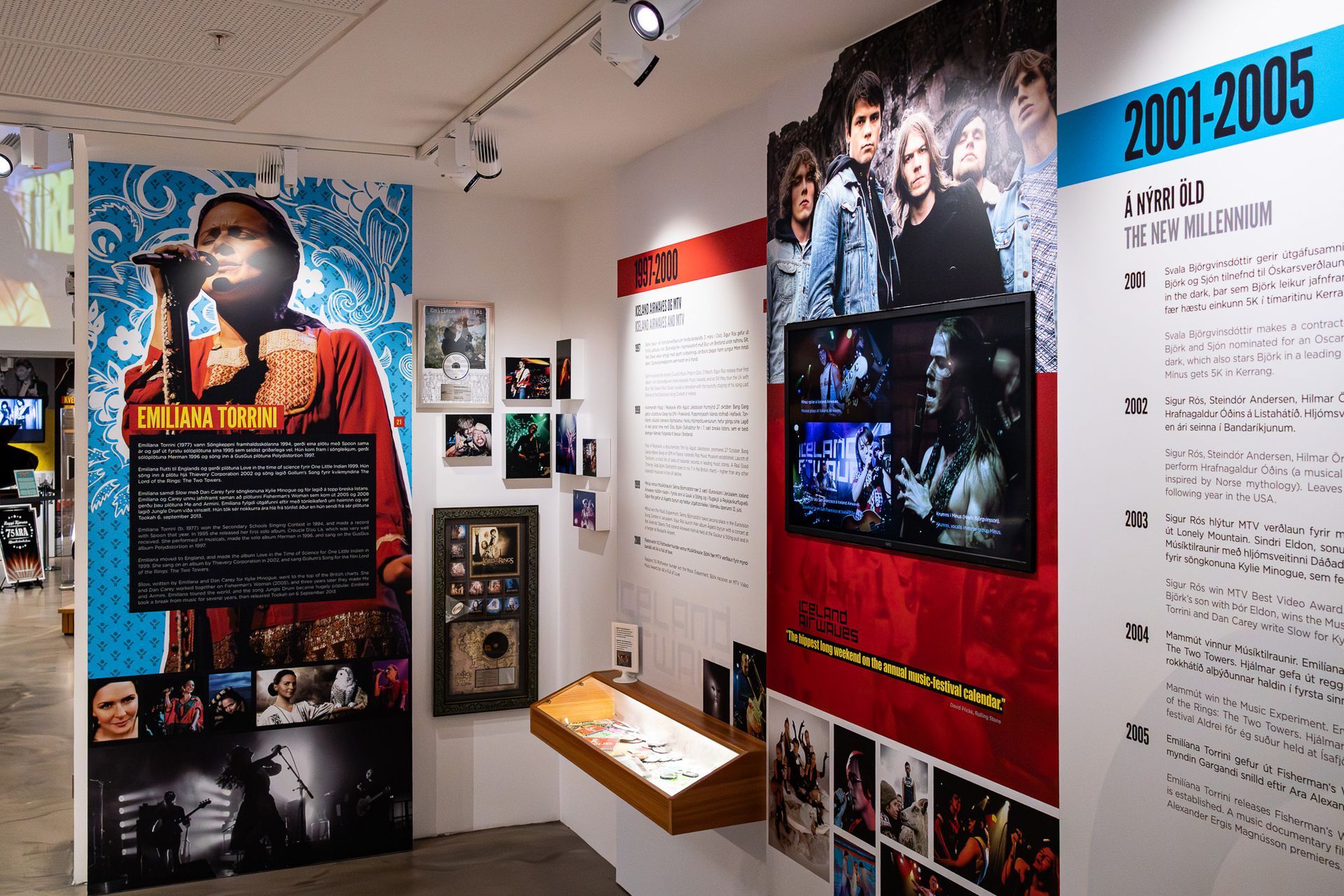
This idea, along with several others of a similar nature, was eventually set aside due to cost. The exhibition and the layout of the exhibition area were then rethought. As a result, the main emphasis was placed on giving the pop memorabilia section an exhibition space on the central square inside the building.
When Reykjanesbær’s future vision was presented at a municipal council meeting in February 2012, it was stated that the aim was to complete construction of Hljómahöll and bring the building fully into use in 2014. The plan allowed for the work to be completed in three phases. The first phase was to complete Stapi Hall and bring it into use in 2012, followed by the music school section in 2012–2013 and the pop memorabilia section in 2013–2014. This plan was successfully carried out.
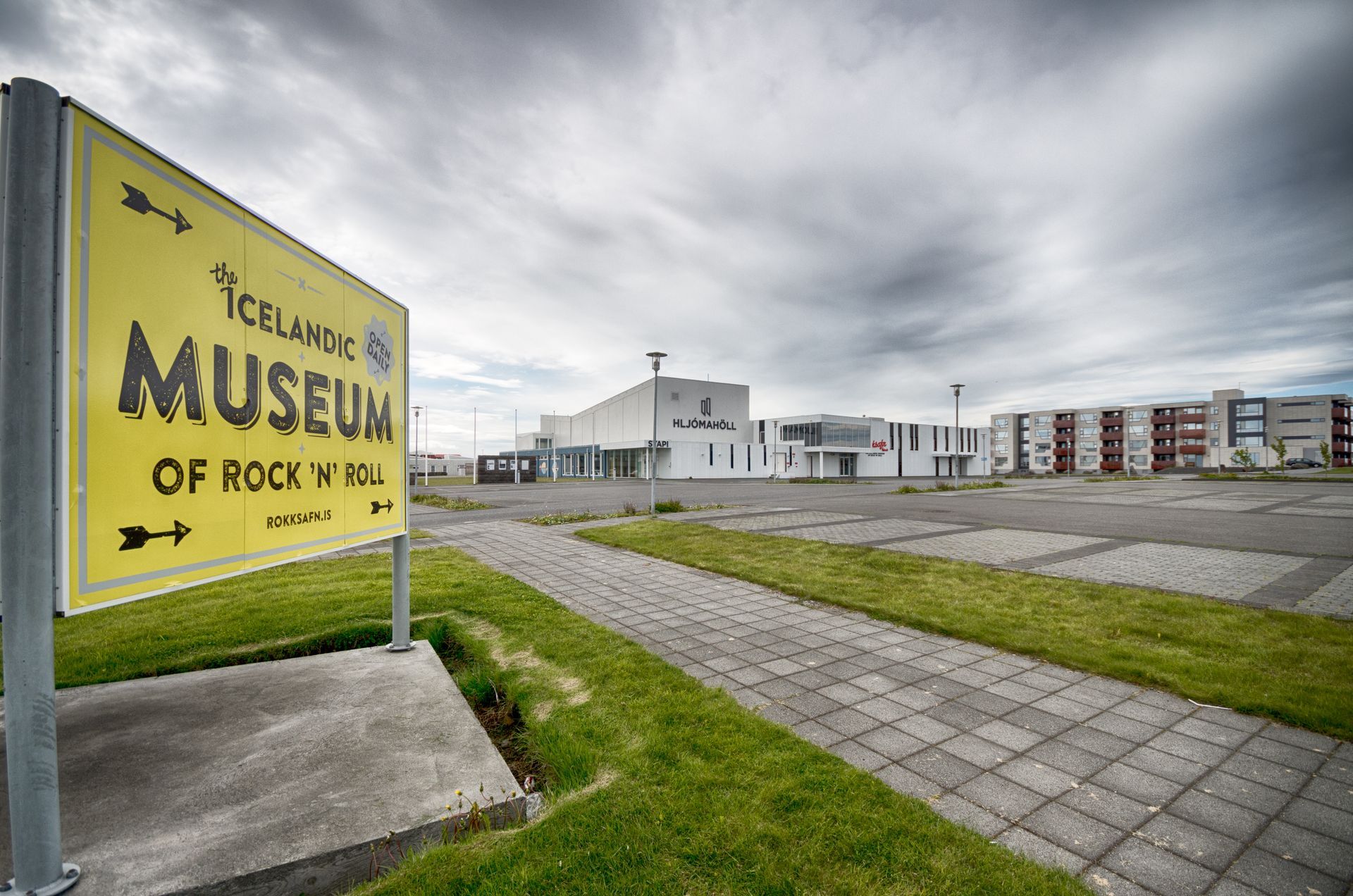
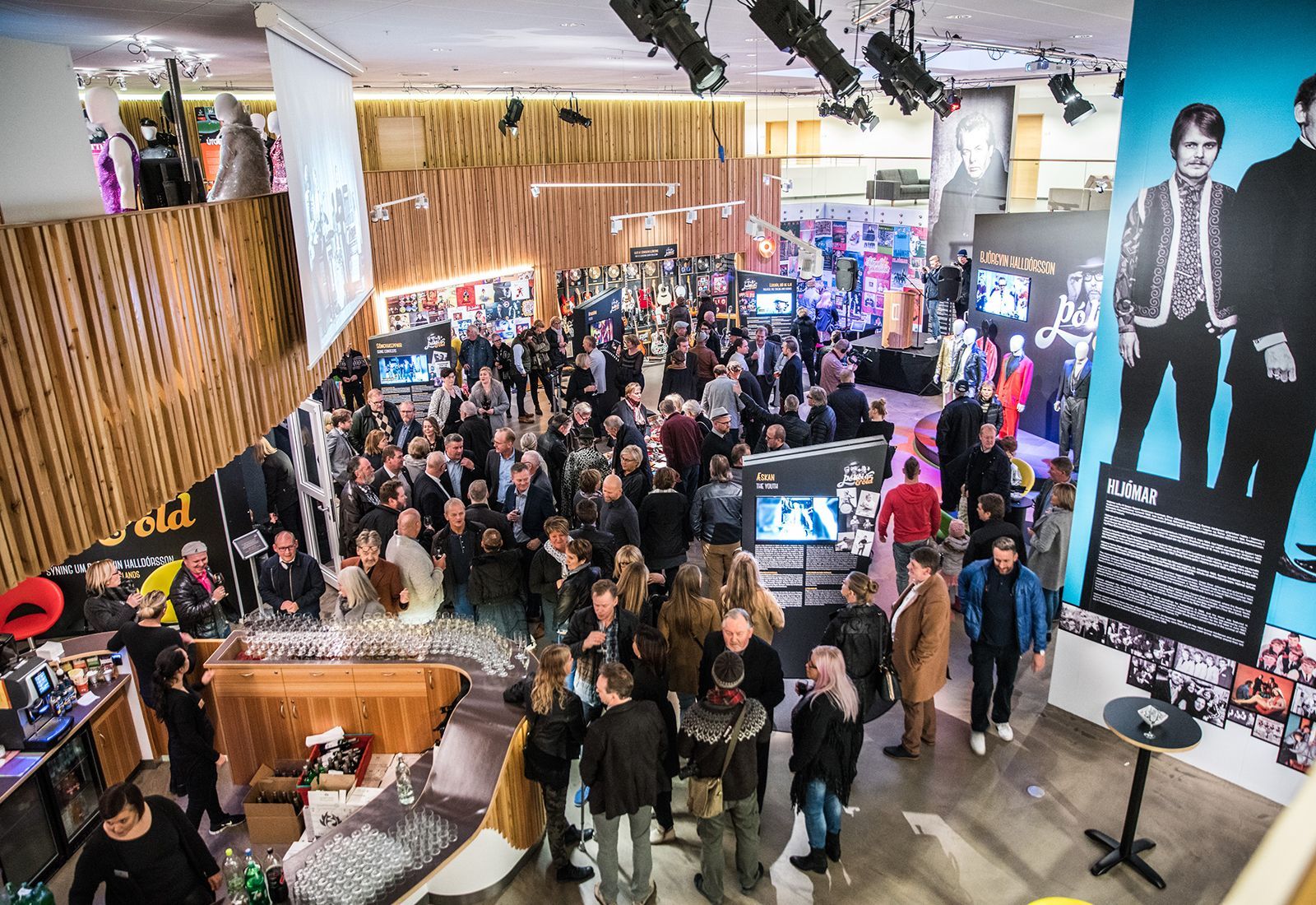
The opening ceremony for Hljómahöll, the Icelandic Museum of Rock ’n’ Roll and the Reykjanesbær Music School was held on Saturday, 5 April 2014. A large crowd gathered to celebrate this important milestone in the history of music, culture and museums in Iceland. Six years had passed since the first sod was turned.
Böðvar Jónsson, president of the municipal council, Árni Sigfússon, mayor of Reykjanesbær, and Kjartan Már Kjartansson, chairman of the board of Hljómahöll, addressed the gathering, with Kjartan Már also serving as host. A varied musical programme was offered throughout the day, with performances by the Reykjanesbær Music School Light Orchestra, Elíza Newman, Valdimar Guðmundsson, Páll Óskar, Magnús and Jóhann, Magnús Kjartansson, Sönghópur Suðurnesja and, finally, Hljómar.
The following description of Hljómahöll’s role was published in connection with the opening ceremony:
“Hljómahöll is a new music and cultural centre in Reykjanesbær. Its role is to serve as an important venue for vibrant community life, conferences, meetings and cultural events in Reykjanesbær. The historic community hall Stapi is part of Hljómahöll and continues to serve its purpose as before. In addition, the new Icelandic Museum of Rock ’n’ Roll is part of Hljómahöll, intended to become an attraction for domestic and international visitors who wish to discover and experience Iceland’s pop and rock history. The Reykjanesbær Music School has also received new and impressive teaching facilities within Hljómahöll. With the arrival of Hljómahöll, a foundation has been laid for increased employment opportunities in the creative industries on the Reykjanes peninsula.”
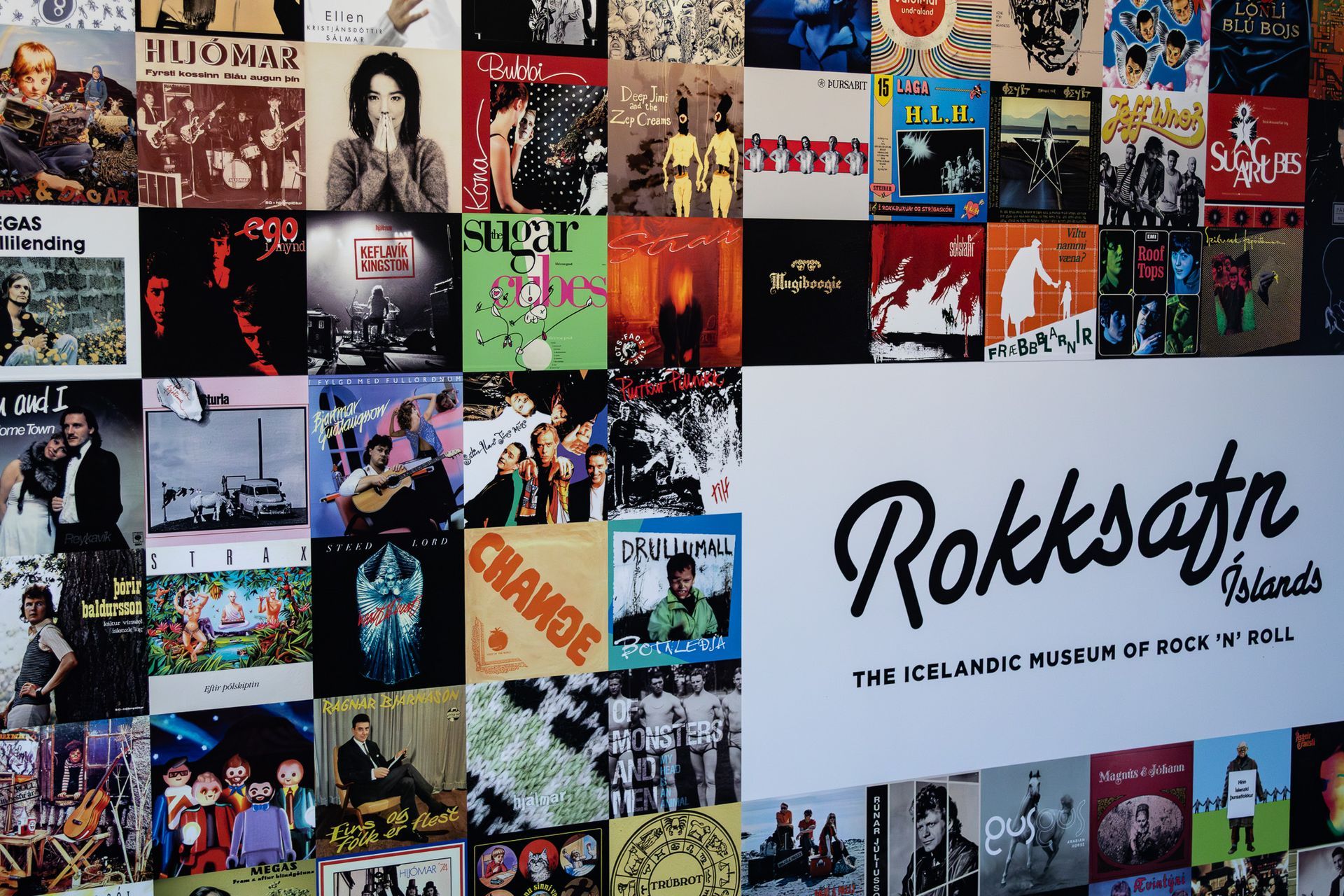
This was the first time the name Rokksafn Íslands (Icelandic Museum of Rock ’n’ Roll) appeared publicly in print, and with it, the name Poppminjasafn Íslands (The Icelandic Museum of Pop) was formally retired.
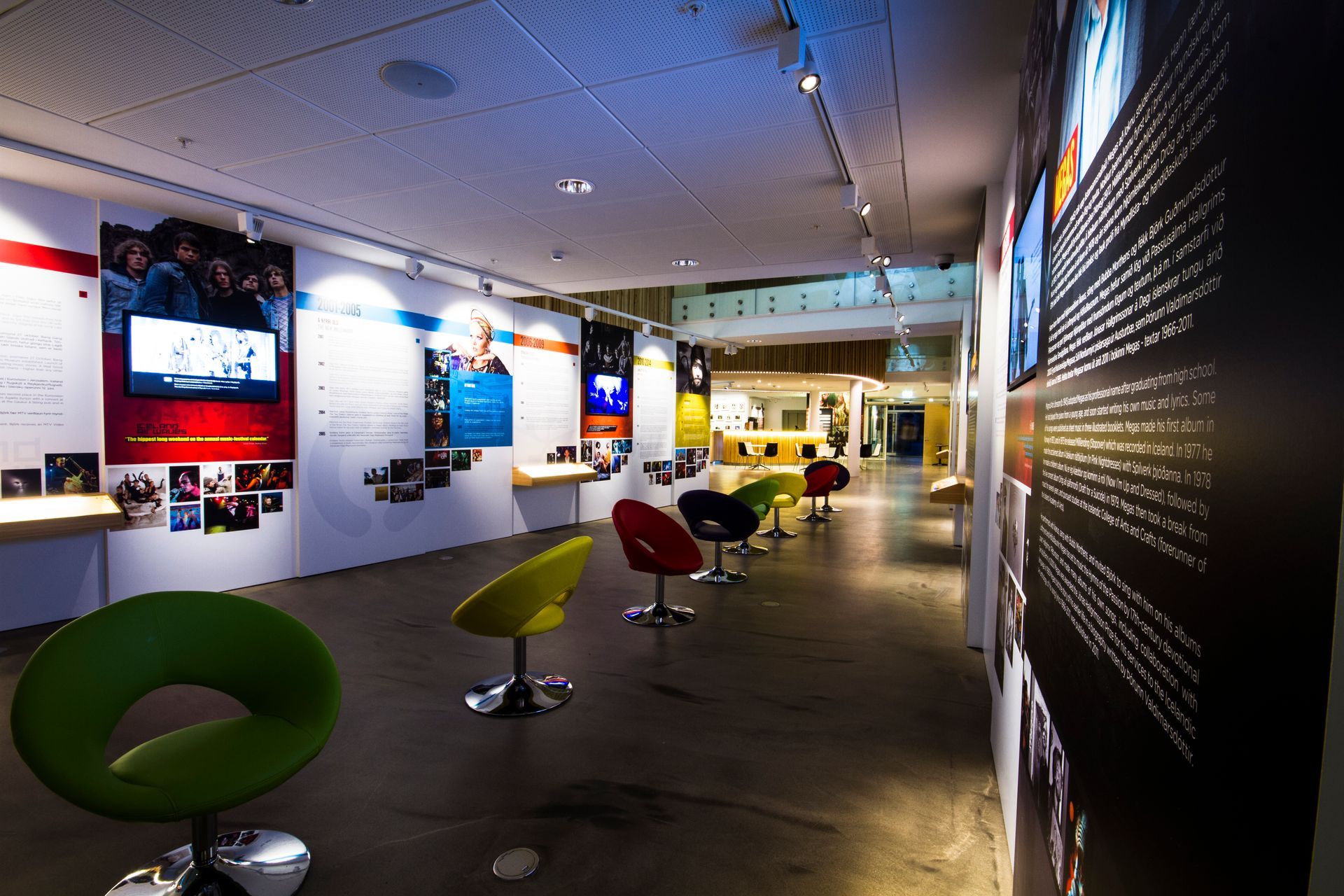
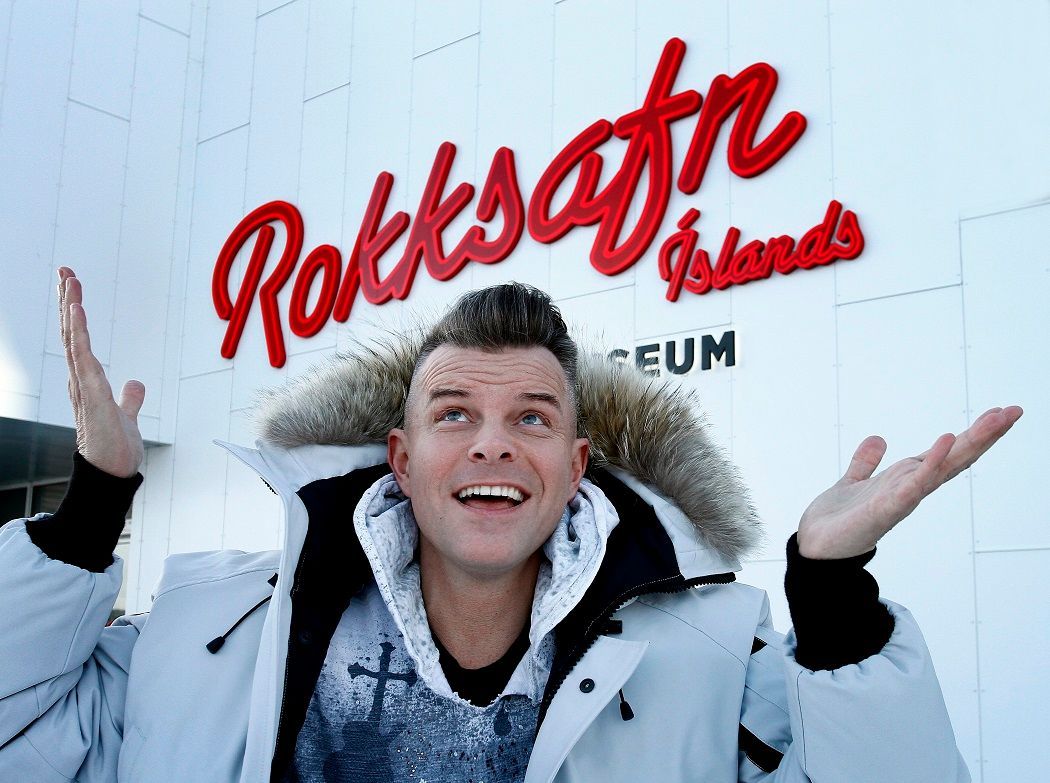
At first, it was assumed that the initial exhibition would be able to attract visitors to the Icelandic Museum of Rock ’n’ Roll. Efforts continued to reach out to musicians and collectors, asking for interesting objects, instruments and other items connected to Iceland’s pop and rock history.
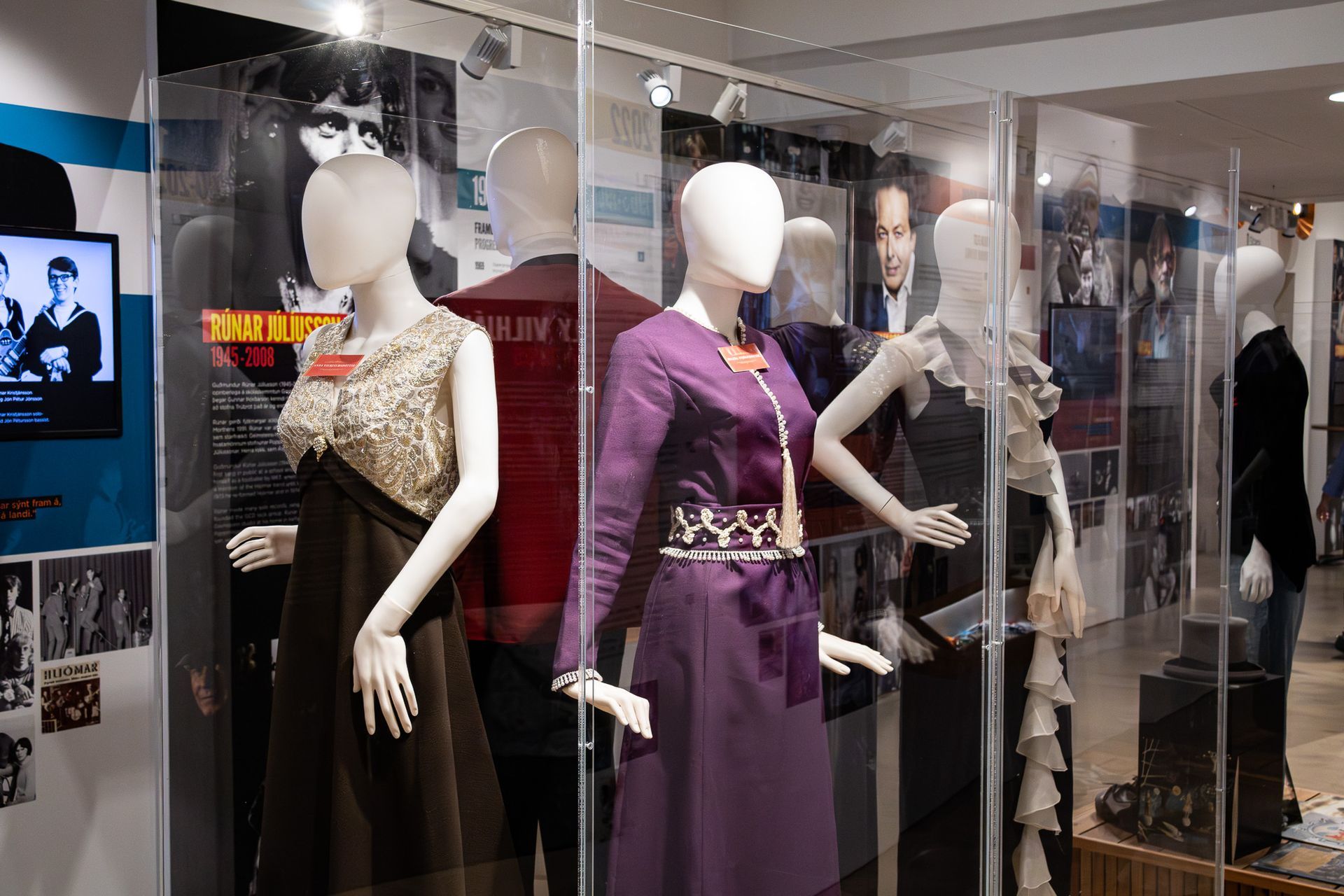
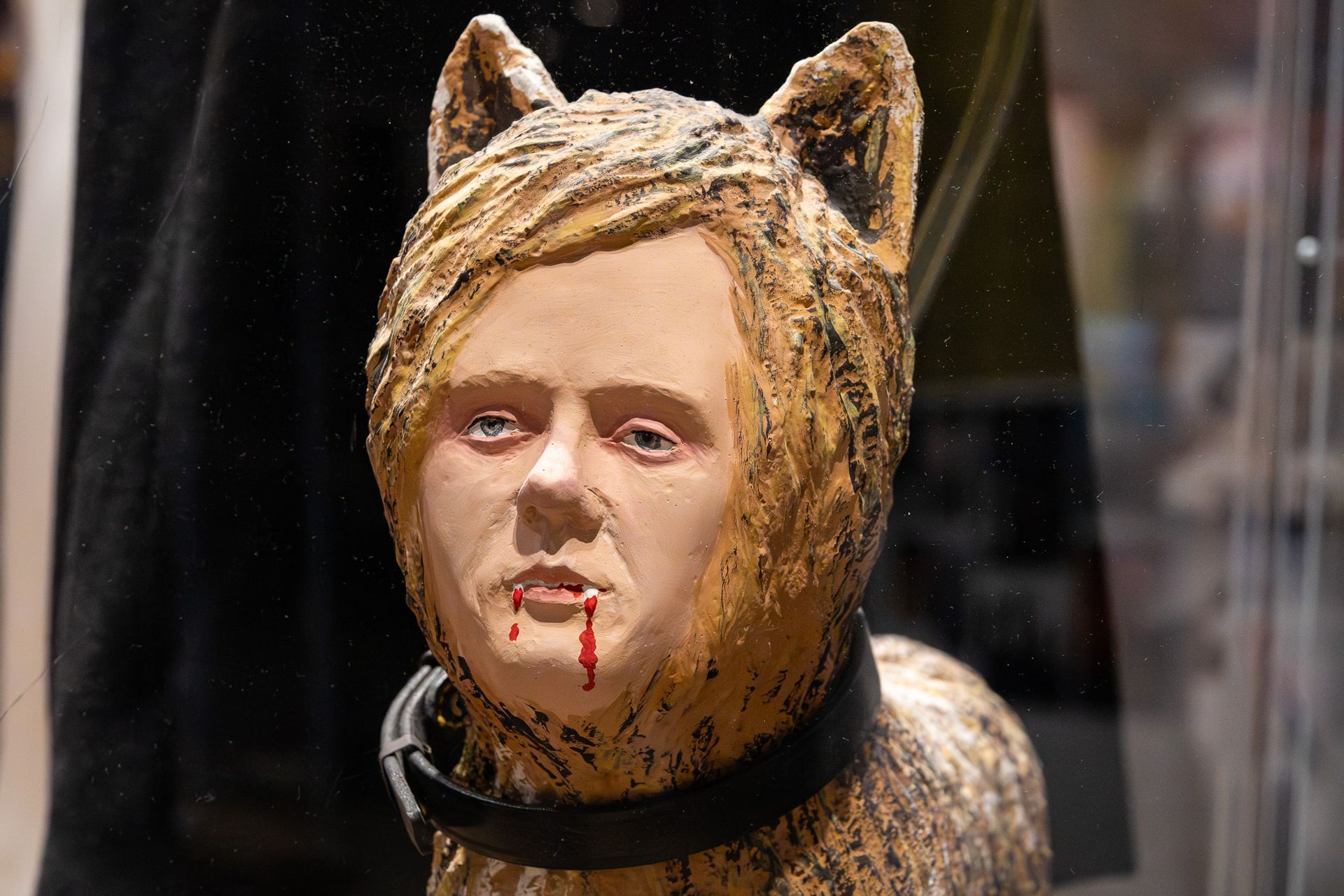
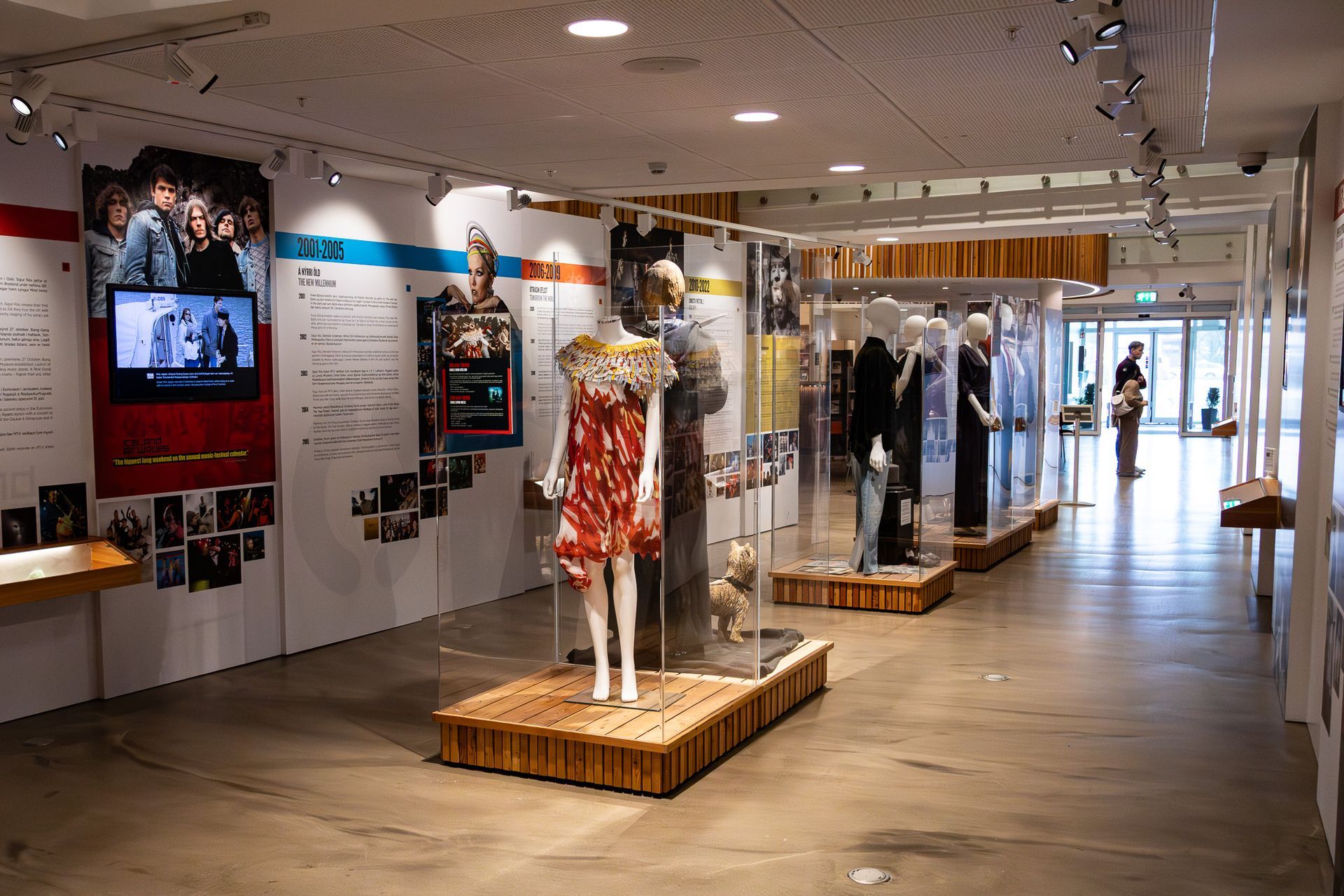
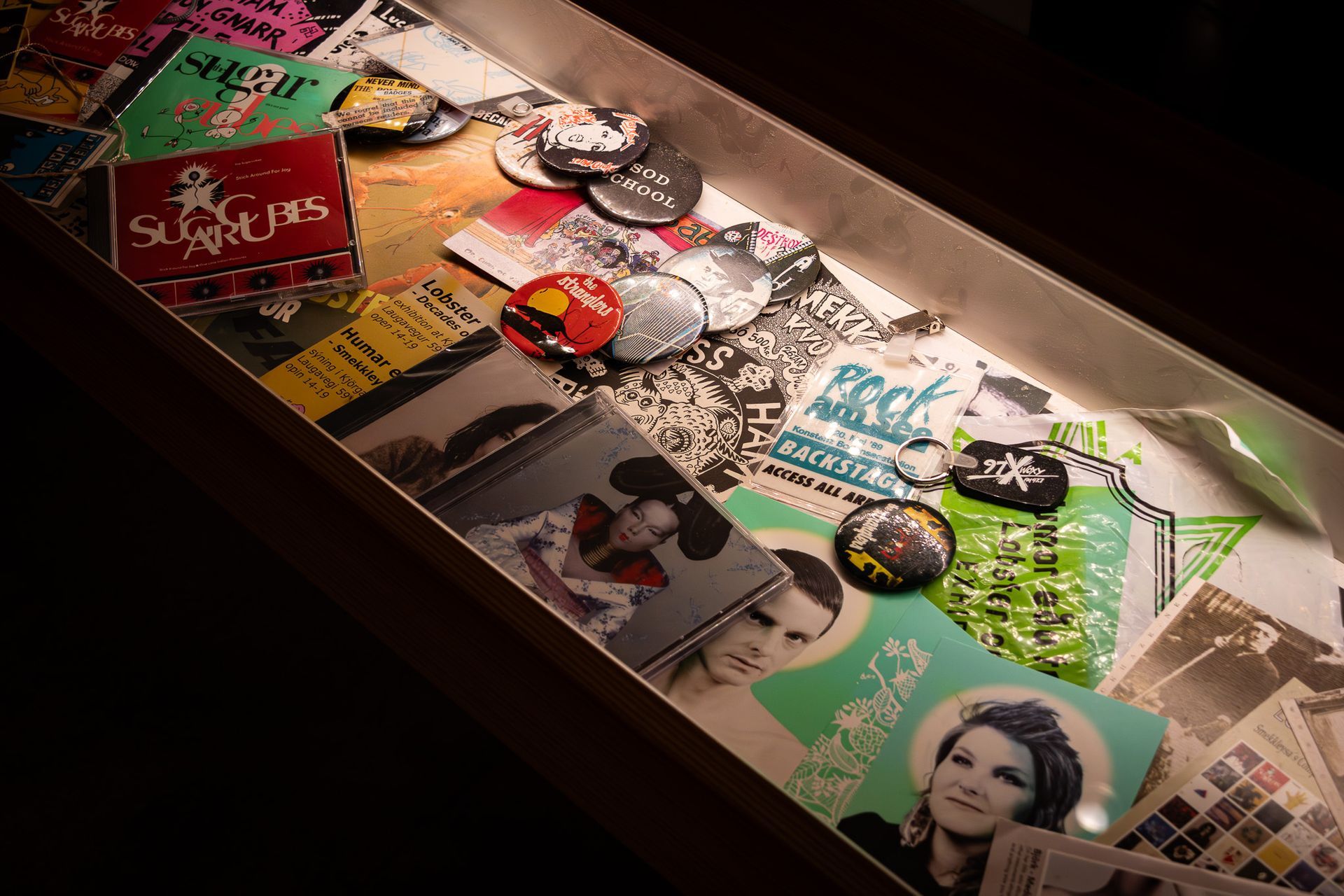
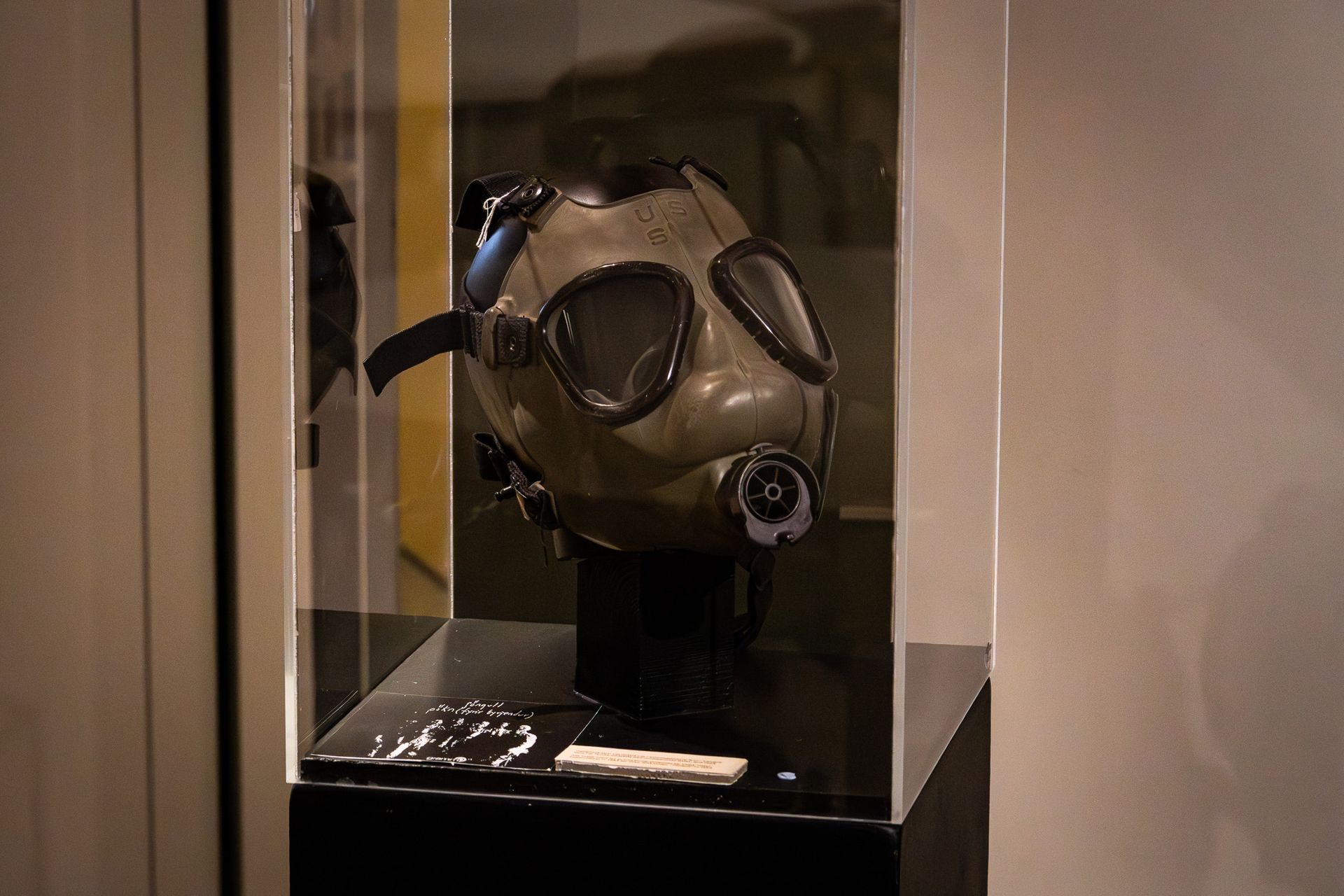
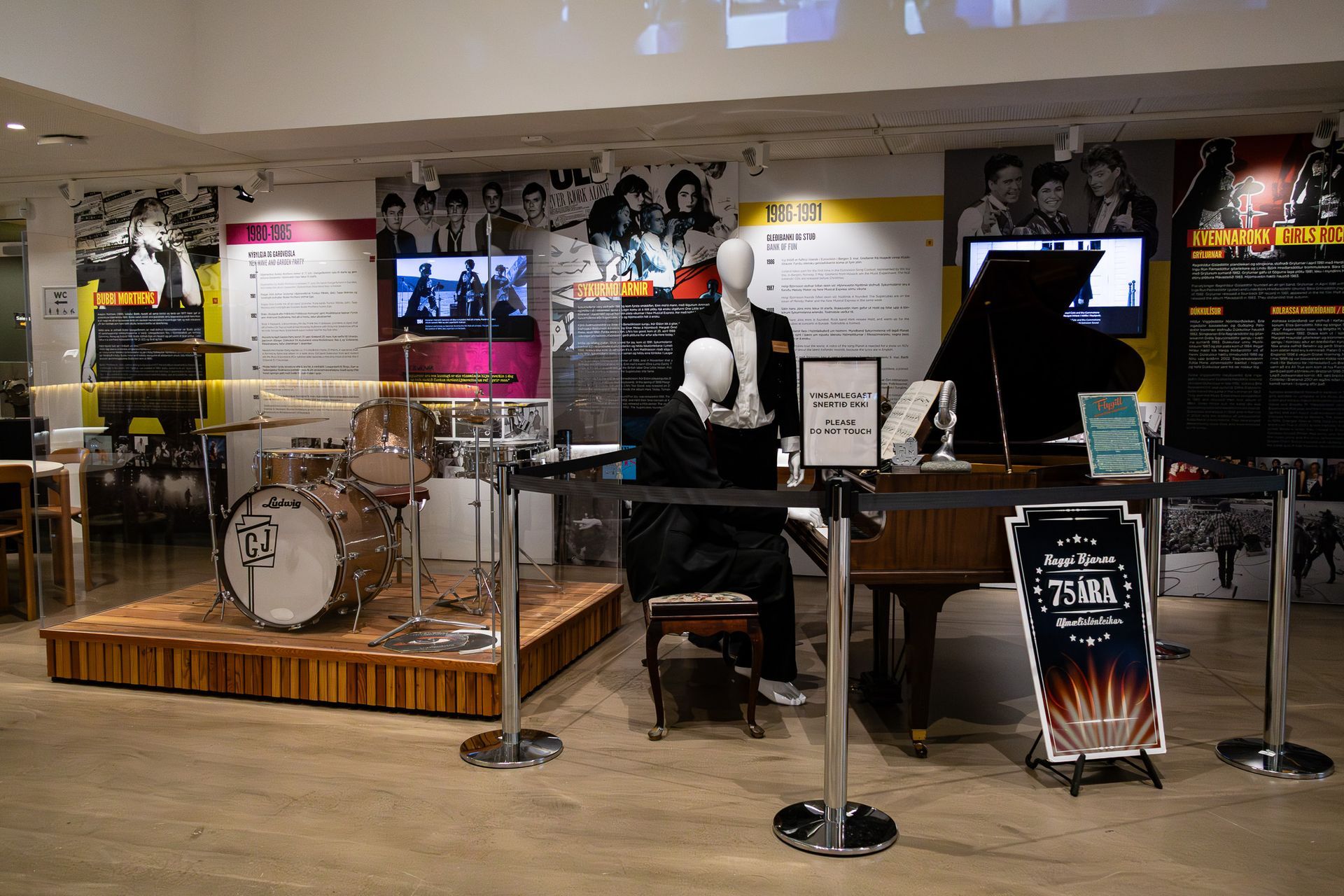
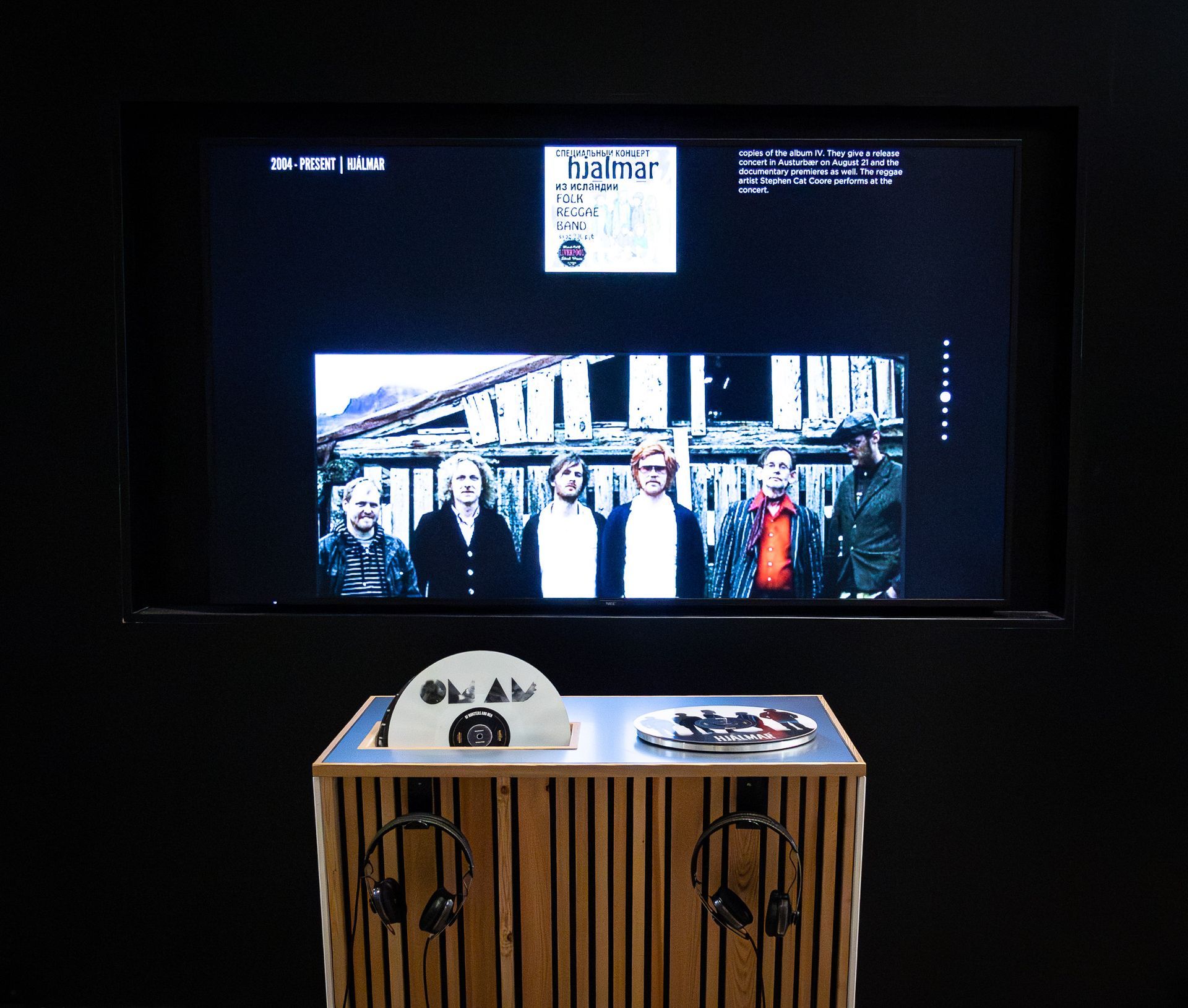
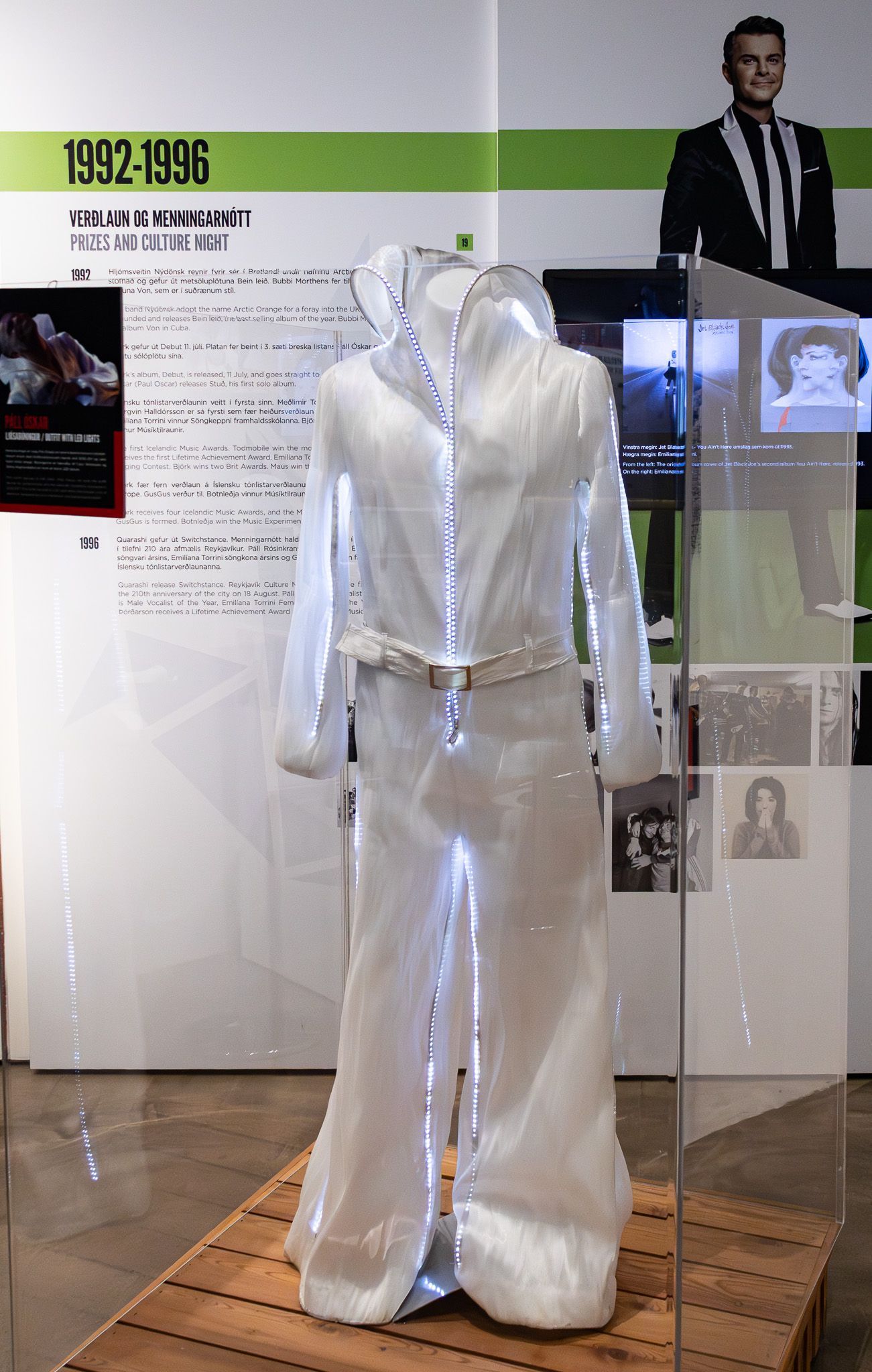
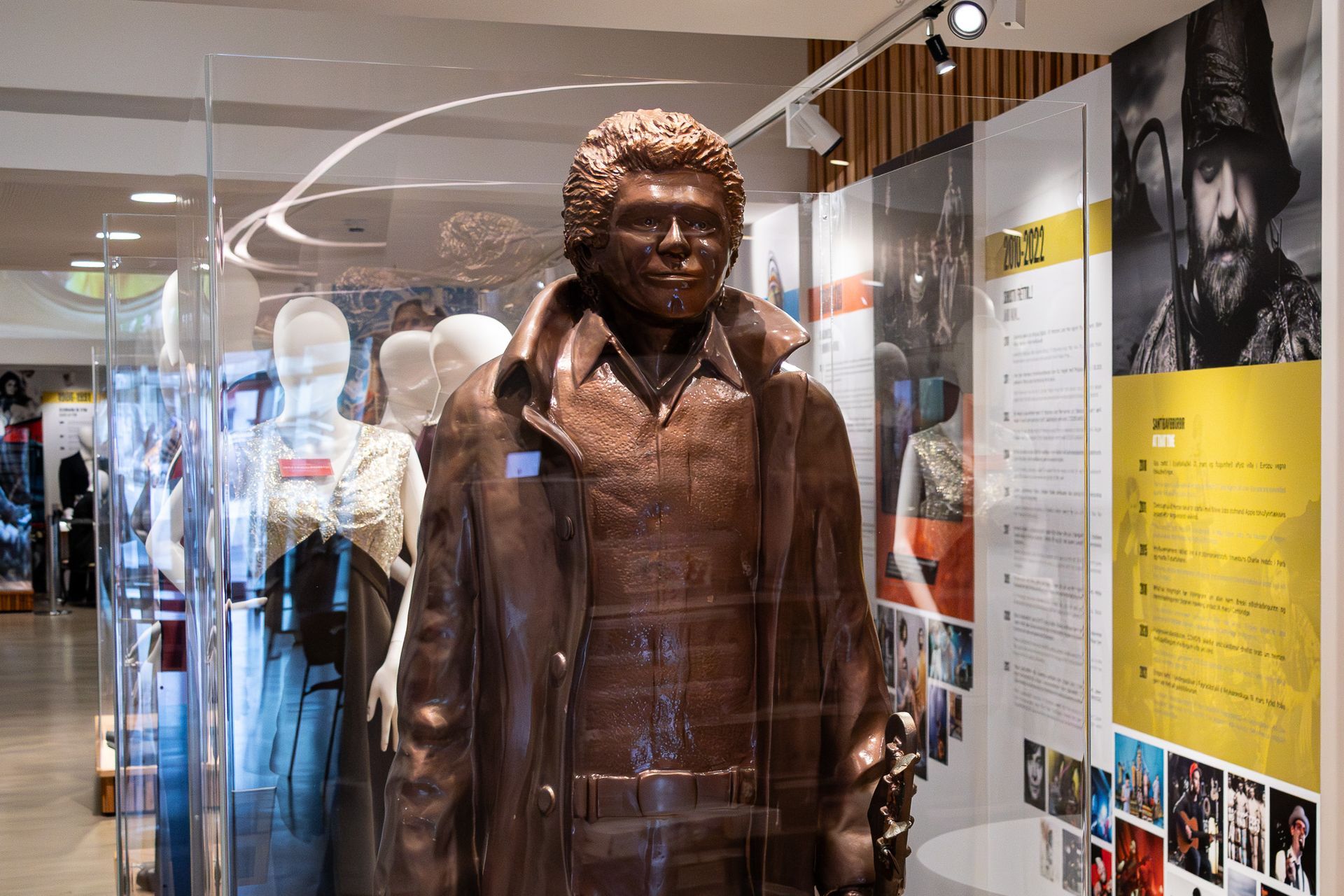
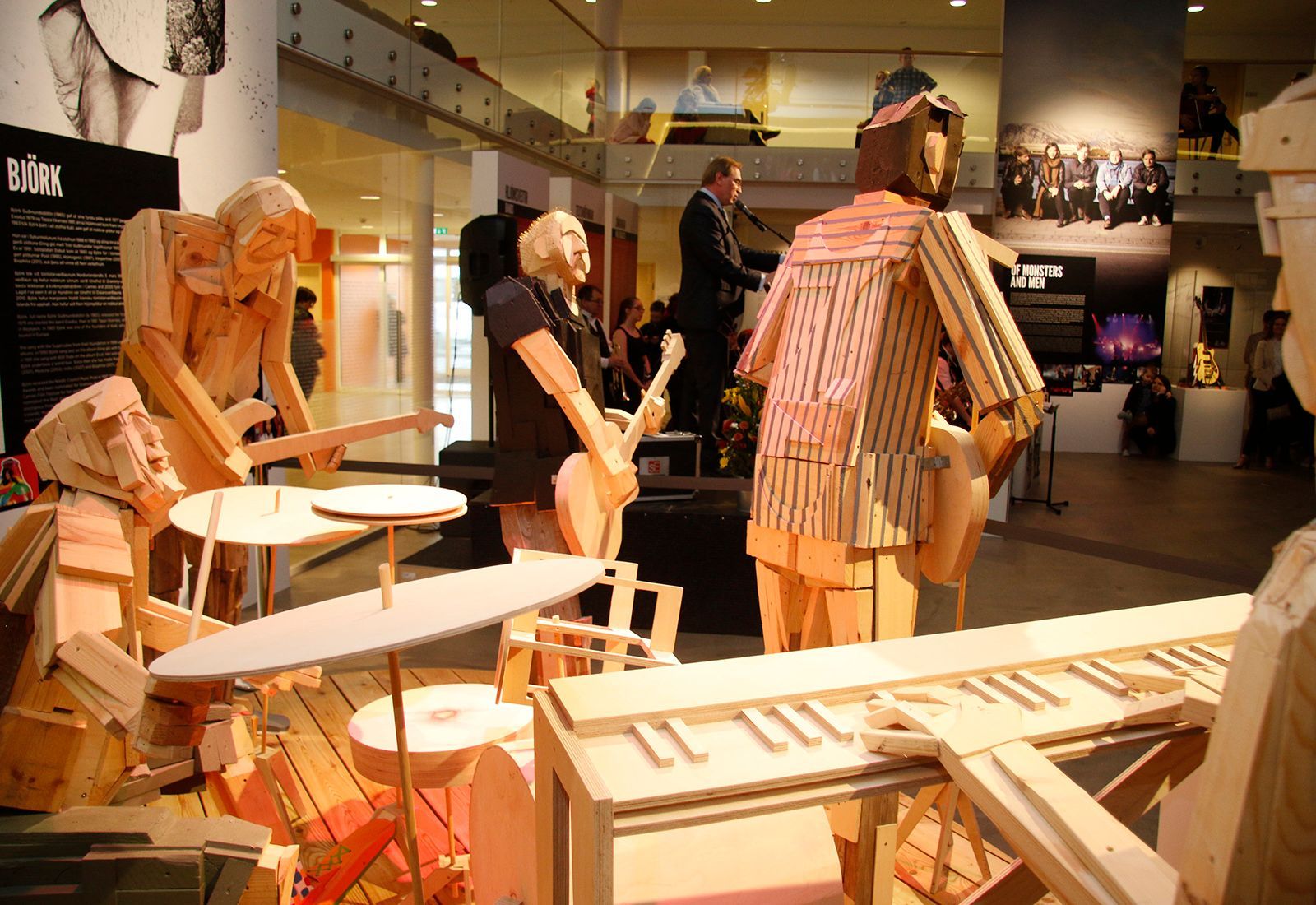
Among the items soon added to the museum’s collection were a Ludwig drum kit once owned by Gunnar Jökull; a dress belonging to Elly Vilhjálms; the dress worn by Emilíana Torrini in the music video for Jungle Drum; a brass band jacket from Stuðmenn, used in the film Með allt á hreinu; a statue of Barði Jóhannsson of Bang Gang; a pianette owned by Ragnar Bjarnason; a wooden sculpture of Hjálmar created by artist Aðalheiður Eysteinsdóttir; and clothing belonging to Rúnar Júlíusson, Haukur Morthens, Helena Eyjólfsdóttir, Anna Vilhjálmsdóttir, Herbert Guðmundsson and others.
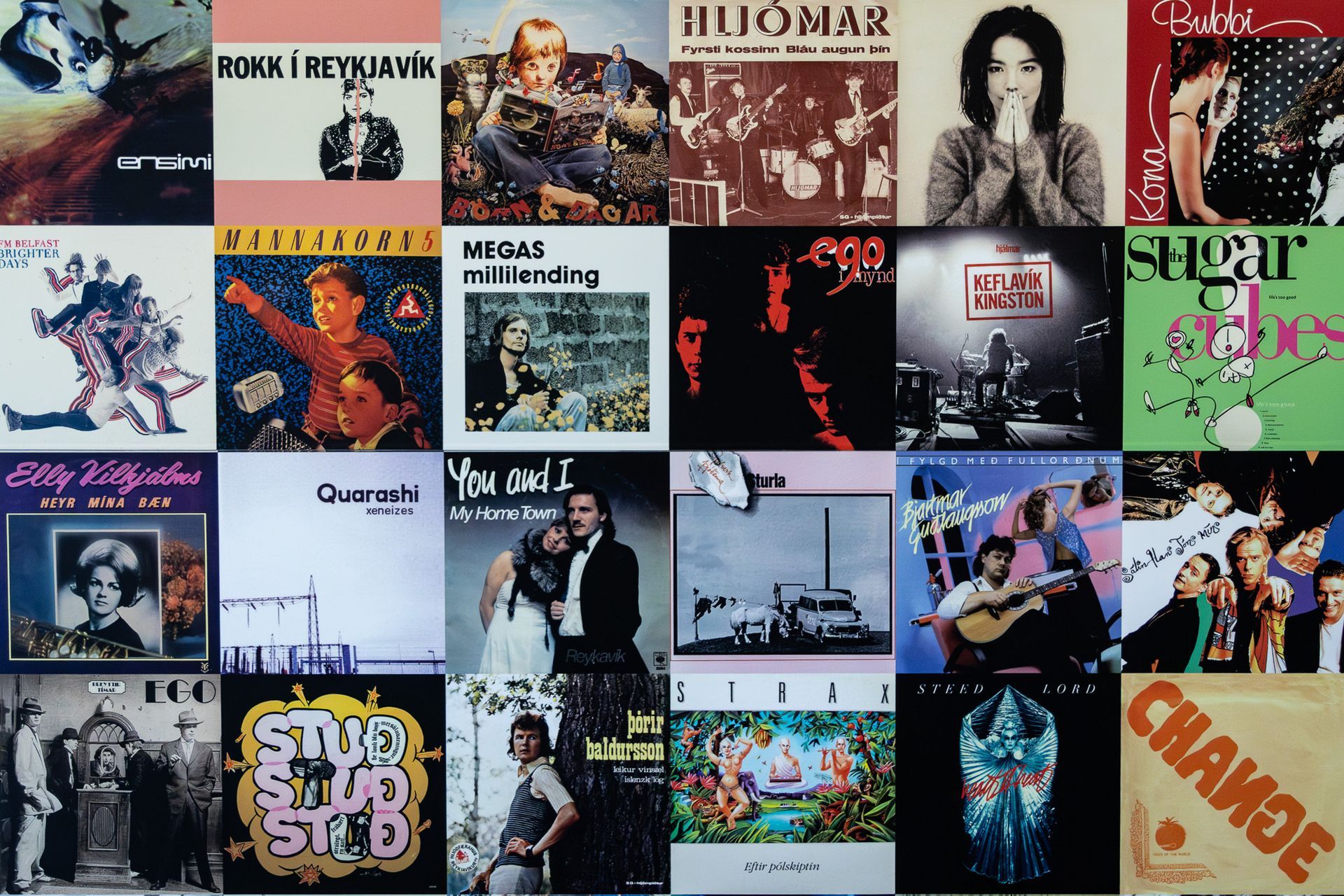
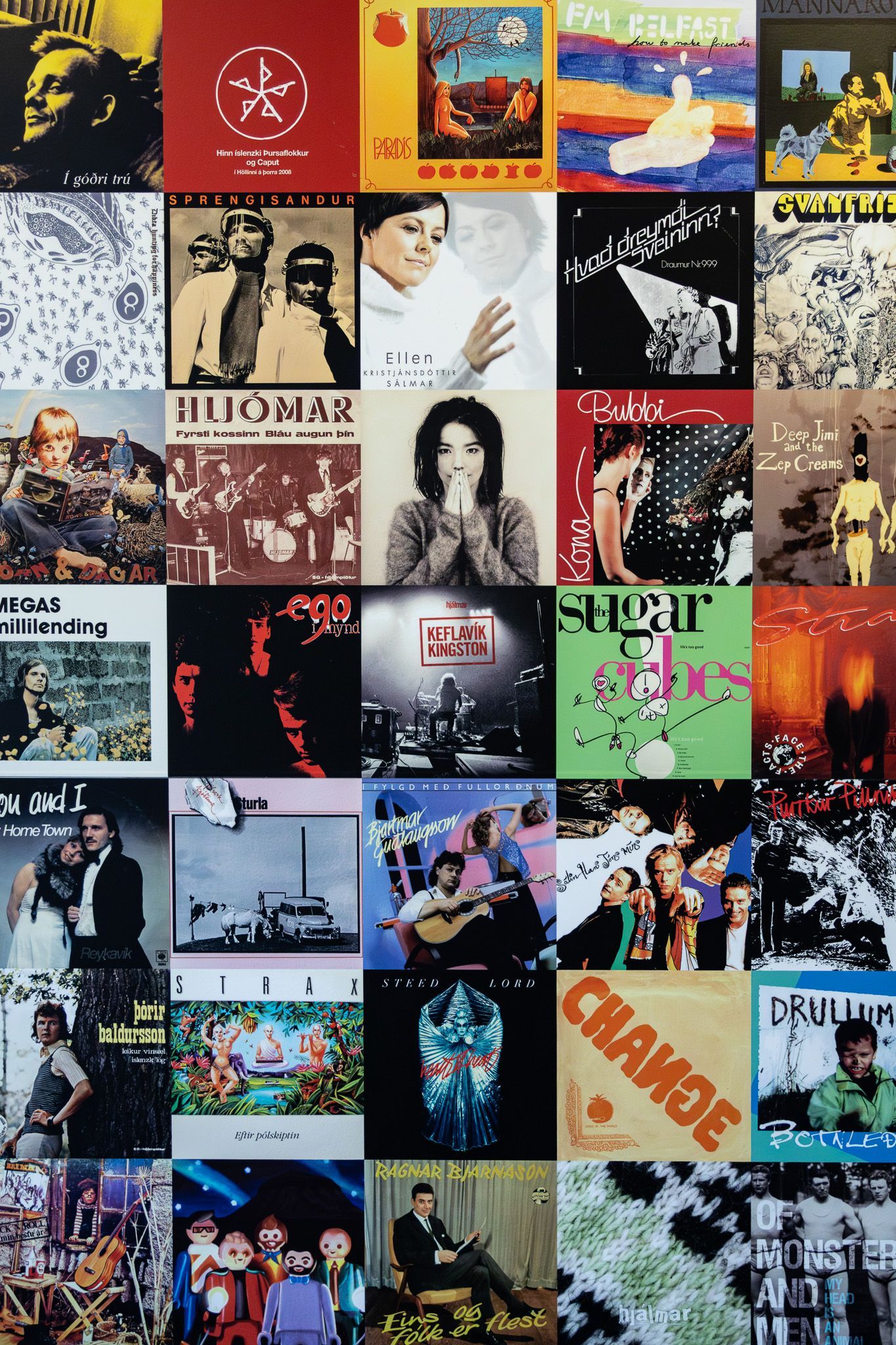
Instruments and objects connected to Hljómar held a central place in the museum, alongside items from musicians from the Suðurnes region and from across Iceland.
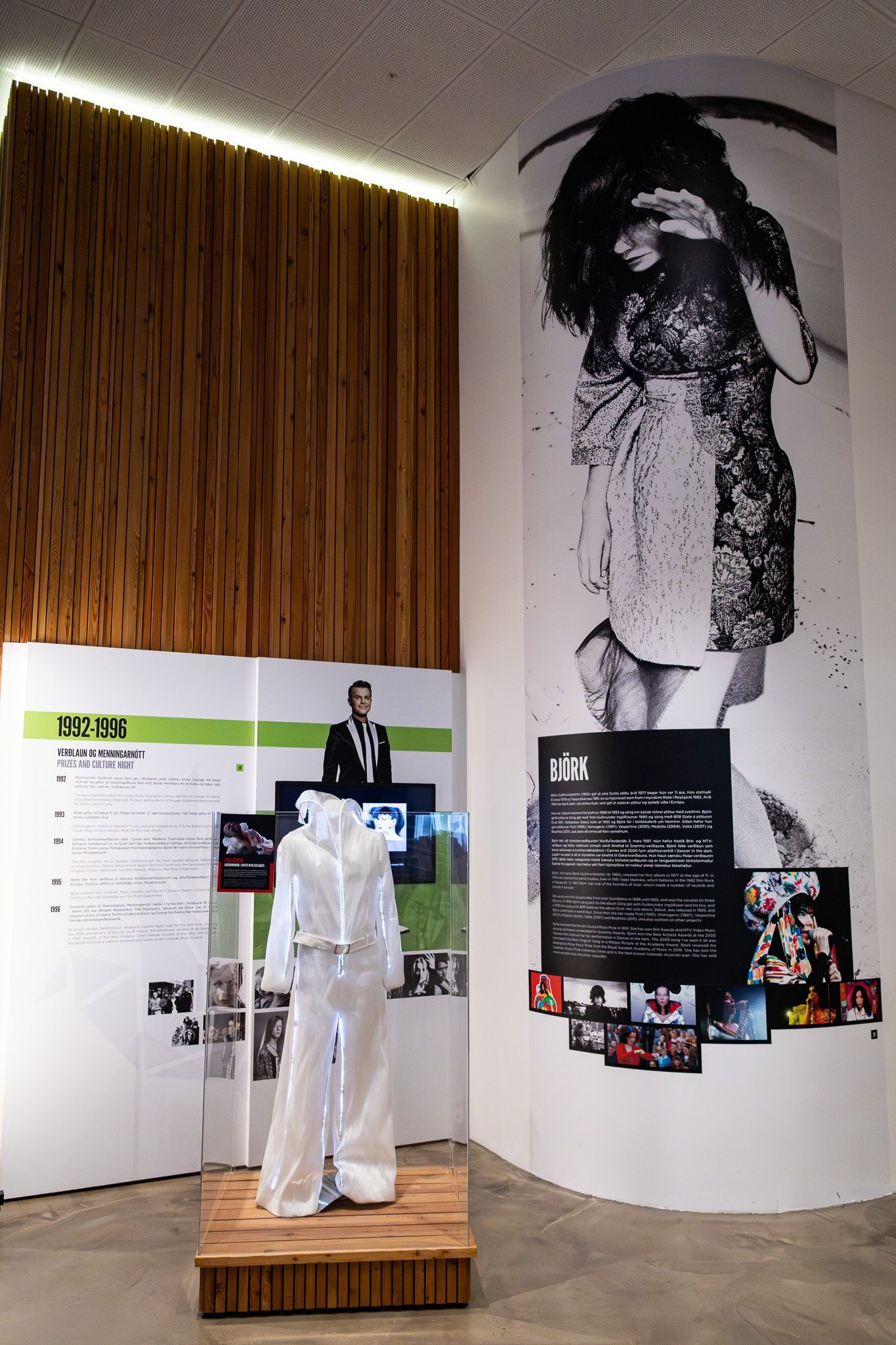
On 31 March 2014, Páll Óskar Hjálmtýsson donated all of his costumes and stage clothing to the Icelandic Museum of Rock ’n’ Roll. The collection dated back to the period after he appeared in The Rocky Horror Show in 1991, when he began collecting costumes. Many of the outfits had been custom-made for Páll Óskar. In addition, he donated all of his gold and platinum records, along with many other personal items.
A special exhibition featuring items from Páll Óskar’s personal collection was installed at the museum and was originally scheduled to open on Saturday, 14 March 2015. However, the weather had other plans, as a severe storm led to the opening being postponed until Sunday, 15 March. The following day, Páll Óskar celebrated his 45th birthday.
The exhibition was titled Páll Óskar – The Private Collection of a Pop Star. It was divided into several periods and served as a kind of retrospective of Páll’s life. On display were clothing, newspaper clippings, drawings, jewellery, advertisements, workbooks, calendars, an old Nokia 6110 phone that Páll used for 14 years, and works of art.
Visitors also had the opportunity to sing along with Páll on selected recordings from his career and mix the songs according to their own preferences.
Páll Óskar was very pleased with the result. He praised the museum, its staff and those whose foresight had led to the opening and operation of such an important museum in such an impressive manner.
At the end of the year, it was announced that 15,594 people had visited the museum that year, most of them to see Páll Óskar’s exhibition. It was noted that around 90% of visitors at the time were Icelandic, while around 10% were international guests.
Visitor numbers had increased considerably year on year, with ticket sales rising by around 100%. At the same time, rentals of Hljómahöll’s halls increased by 50% between years, one of the highest increases of its kind in Iceland. A few years later, the proportion of international visitors had risen to nearly 40%.
After the exhibition Páll Óskar – The Private Collection of a Pop Star had been on display for a year and a half, it was decided to take down part of it and place the key items on what became known as Nöglin — “the Pick” — an elevated platform shaped like a guitar pick above the reception area. This was done to make room for the next special exhibition, which was already being prepared and would attract no less attention.
That special exhibition opened on 12 November 2016. Titled Þó líði ár og öld, it placed the spotlight on the career of singer, songwriter and musician Björgvin Halldórsson. The exhibition explored many sides of Björgvin, whose interests and work have extended far beyond music over the years.
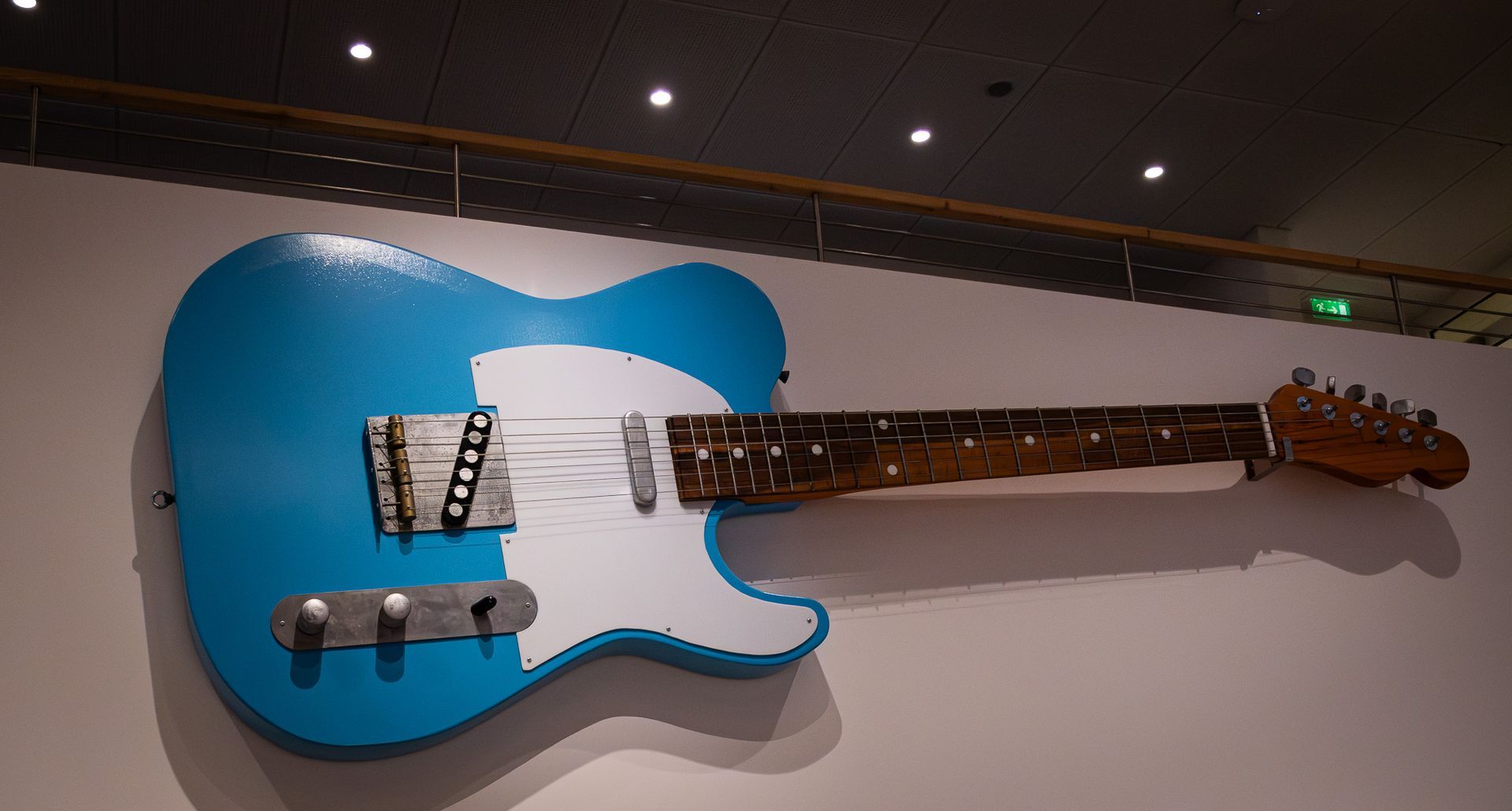
Björgvin is an avid collector, and guitars are among the items he collects. Numerous guitars from Björgvin’s collection were placed in a large glass display case, where they remained long after the exhibition itself had been taken down.
The exhibition covered a long period of time and included items that Björgvin’s mother had made sure were not lost, as well as gold records, lyric sheets, jukeboxes, a wealth of photographs and videos, and various other objects that Björgvin had gathered over the course of his long career.
Visitors had the opportunity to sing Björgvin’s songs in the museum’s vocal booth and mix a popular song he had performed. The exhibition was well received and remained open for just over a year. On 25 March 2017, Björgvin also performed a well-attended, personal concert with his band in Stapi Hall at Hljómahöll.
On 7 March 2021, the Icelandic Museum of Rock ’n’ Roll opened the exhibition Melódíur minninganna. The exhibition focused on Jón Kr. Ólafsson’s music collection, Melódíur minninganna, located in Bíldudalur.
Preparations for the exhibition had been under way for quite some time. It featured numerous objects connected to musicians such as Elly Vilhjálms, Ragnar Bjarnason, Haukur Morthens, Svavar Gests, Stuðmenn and others.
Through the use of technology, visitors were able to experience the museum in Bíldudalur. Part of the exhibition included interactive virtual reality headsets, allowing guests to explore and walk through the music collection, which had been specially filmed for the exhibition.
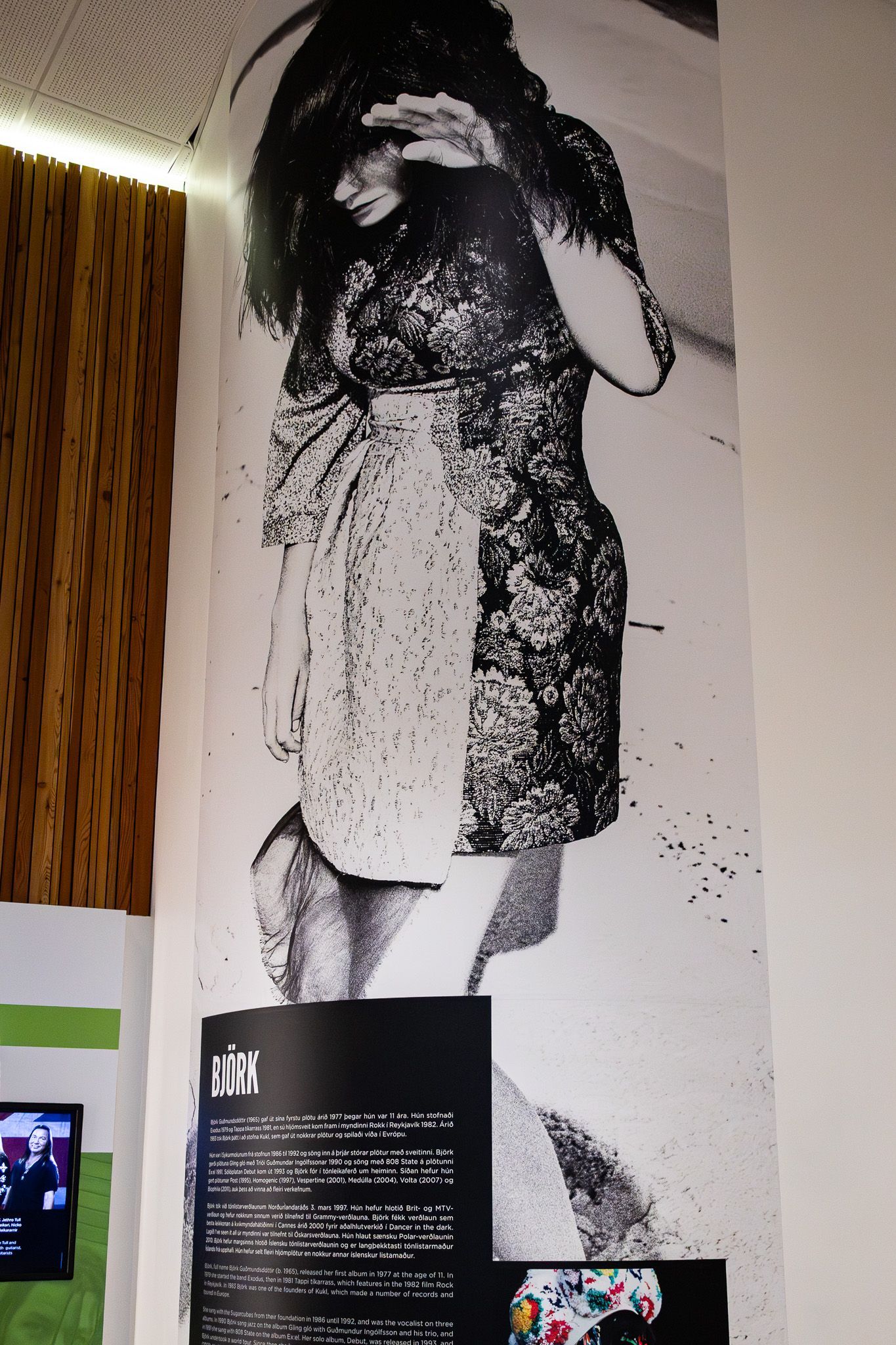
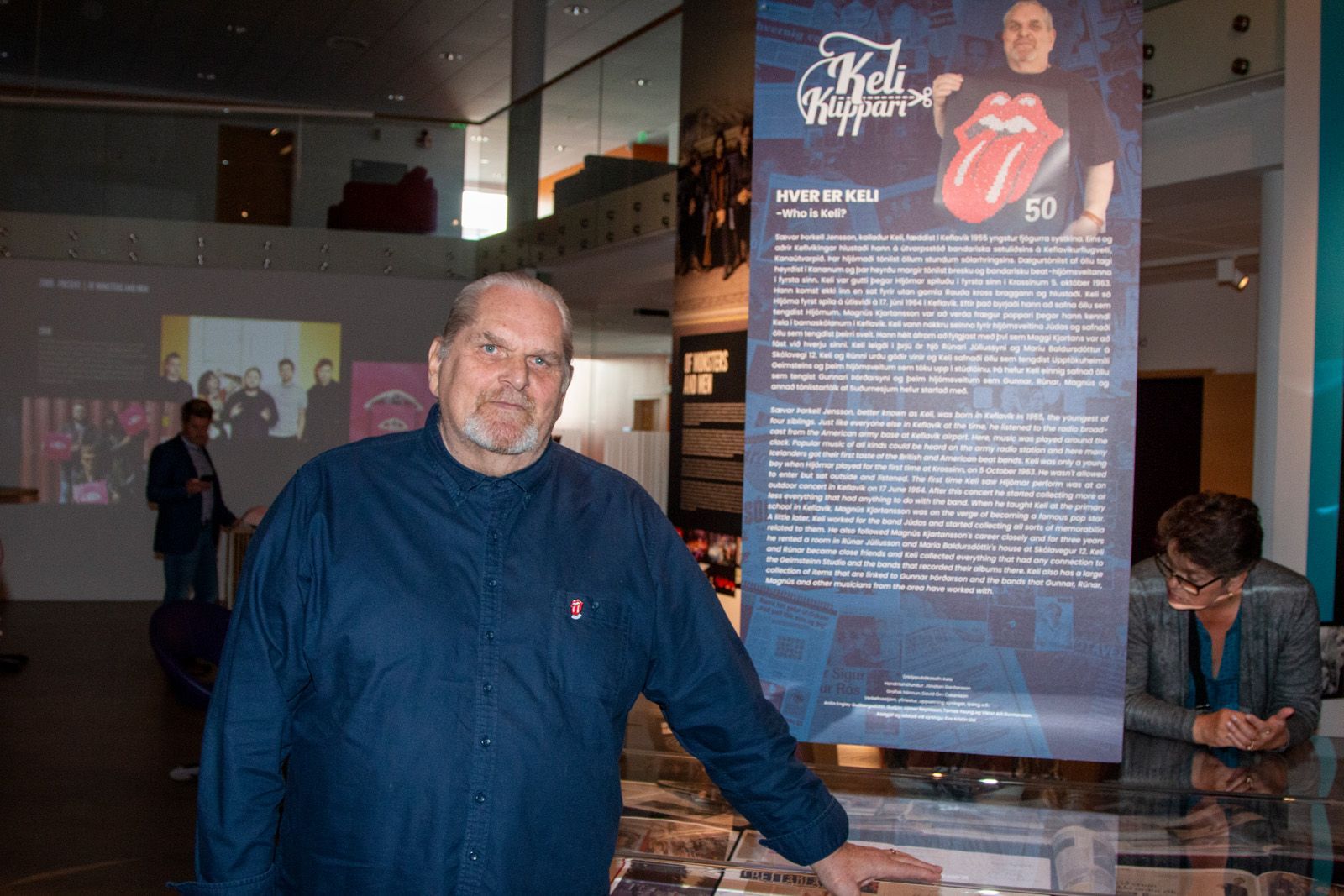
The exhibition Keli’s Scrapbook Collection, featuring part of Sævar Þorkell Jensson’s extensive collection of clippings, opened in August 2022. Keli is from Keflavík and began collecting autographs and clippings in 1964. He owns one of the largest music-related clipping collections in Iceland and has also collected autographs throughout that time, including signatures from world-famous musicians. By the time the exhibition was held, the scrapbooks numbered more than 350. Among the artists Keli has followed and collected material on, and who can be found in his books, are Hljómar, Maggi Kjartans, Hjálmar, Bubbi Morthens, Björk, Jónas Sig, GDRN, John Grant, Bríet, Helgi Björnsson, Stefán Jakobsson, Baggalútur and many others.
The Icelandic Museum of Rock ’n’ Roll received the Innovation and Encouragement Award from Reykjanes Tourism in early 2019. The award was presented around the same time as the museum celebrated its fifth anniversary.
On the occasion, Tómas Young, CEO of Hljómahöll, said:
“This was a very enjoyable recognition. The response from visitors has been positive, and people are generally very pleased with the exhibitions. In the past, many people thought this was only an exhibition about Bítlabærinn Keflavík, but in reality, everyone has an equally important place in the exhibition. After all, it is called the Icelandic Museum of Rock ’n’ Roll, not the Reykjanesbær Museum of Pop.”
In its statement, Reykjanes Marketing Office wrote:
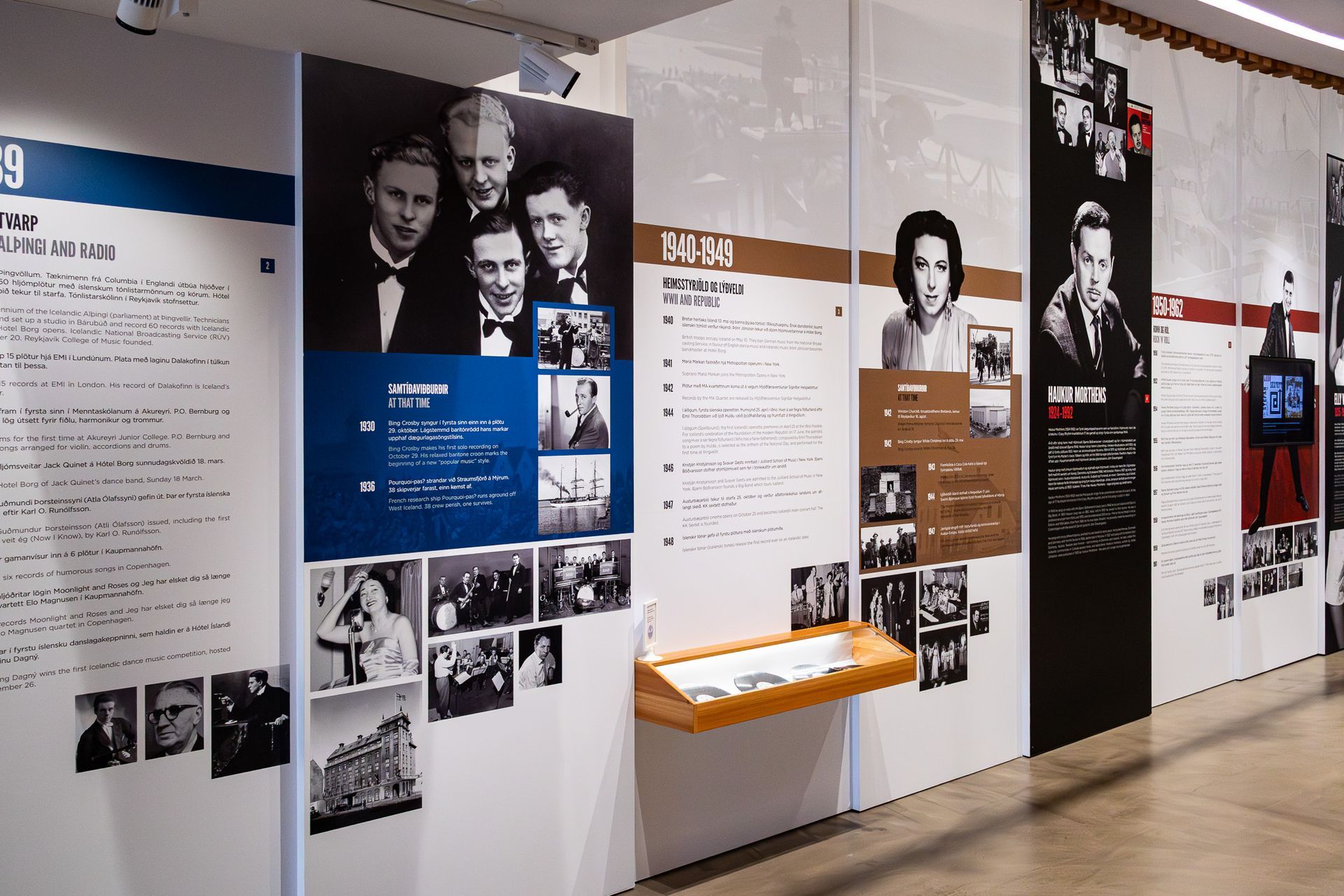
“The storytelling heritage of Icelanders has deep roots, and across the country there are museums and exhibitions that preserve and remind us of our history and cultural heritage. The Icelandic Museum of Rock ’n’ Roll, as its name suggests, tells the story of music in Iceland from 1830 to the present day, with a special emphasis on pop and rock music, which is closely interwoven with our modern history and culture in the Suðurnes region.
Although the museum has a relatively short history — it opened in April 2014 and celebrates its fifth anniversary this year — it has firmly established itself within the cultural life of the community through events and special exhibitions, with new additions regularly being made to its diverse collection of museum objects.
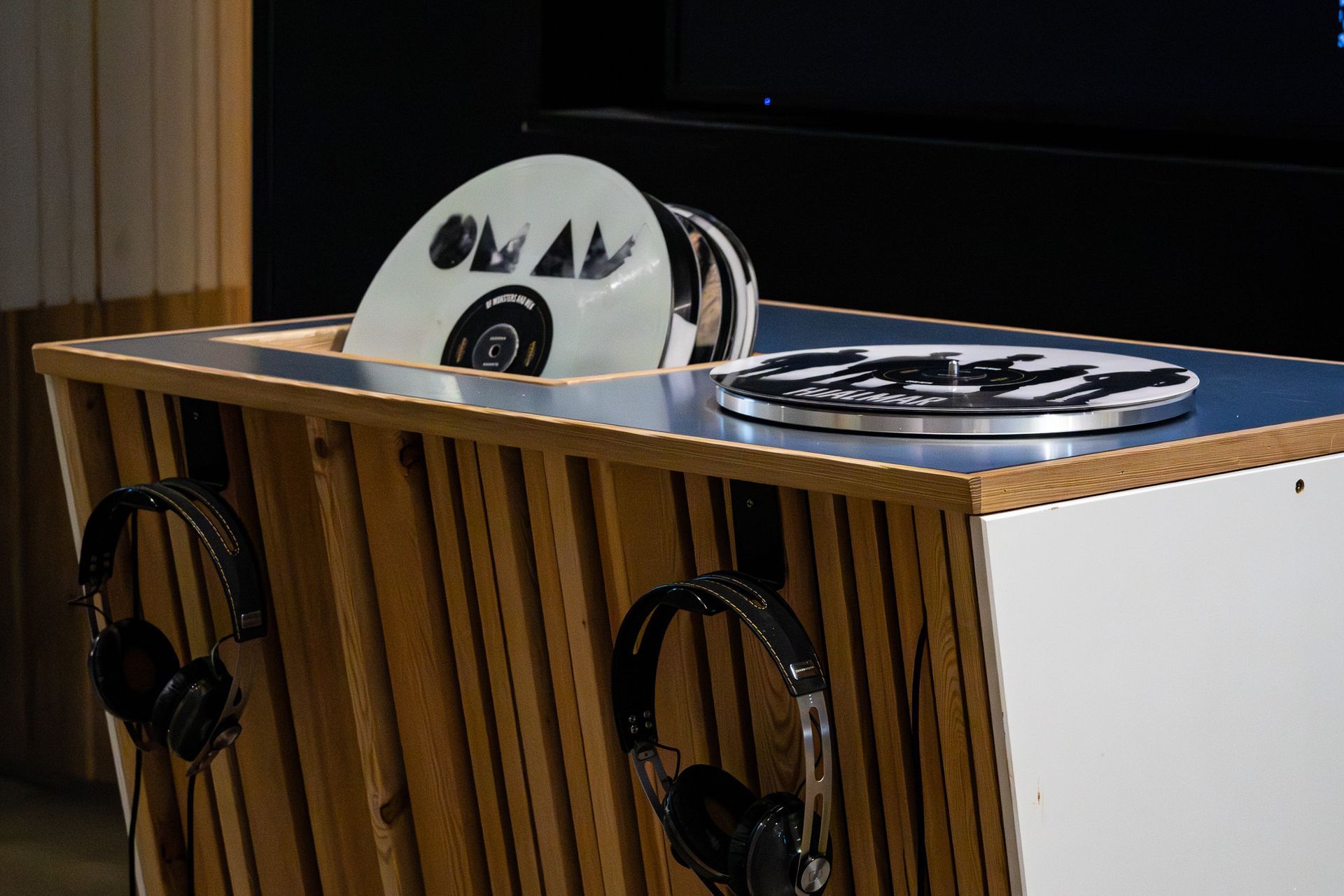
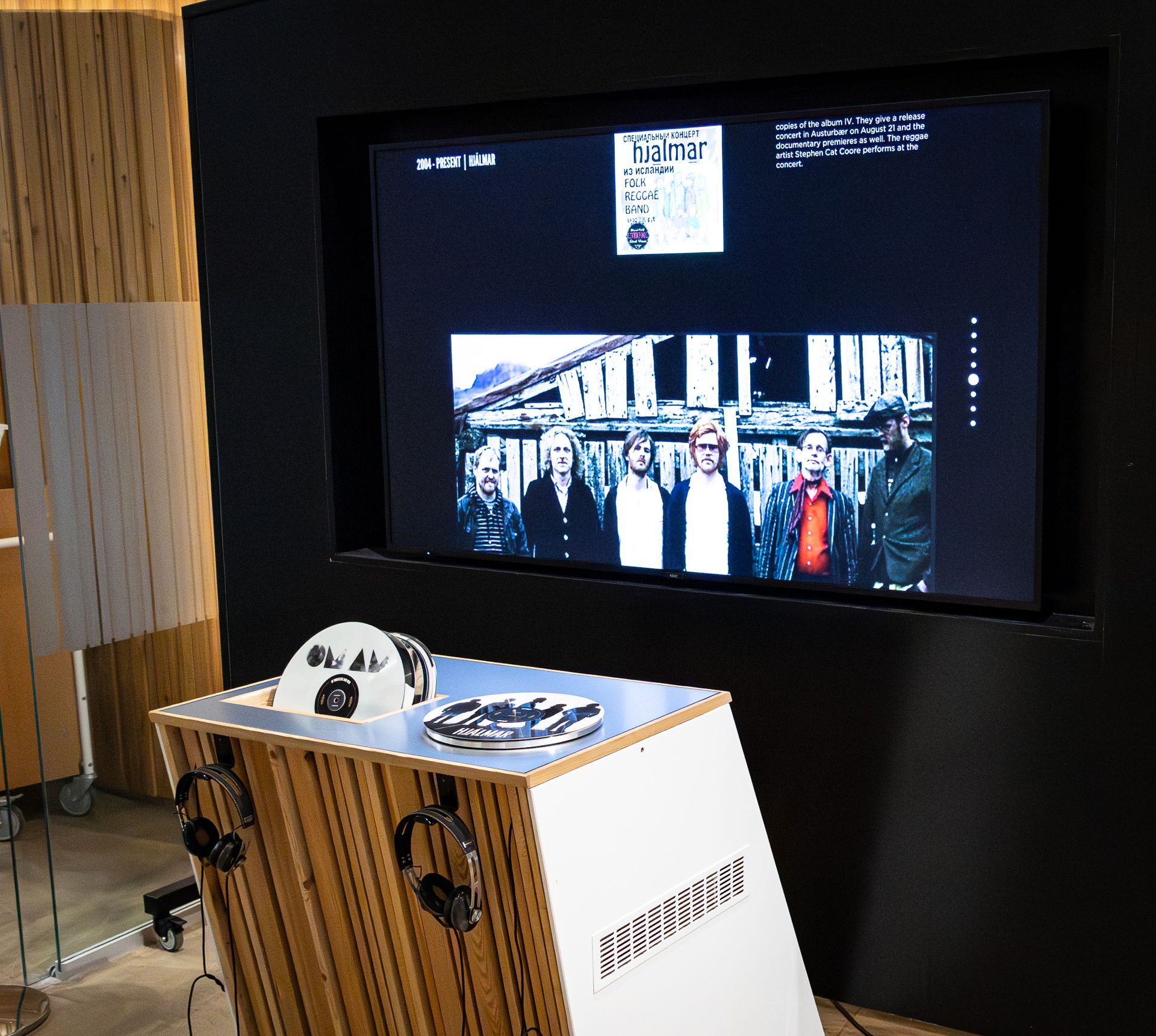
The museum’s representatives have shown great ambition in developing the museum and finding ways to bring history to life in a professional, engaging and enjoyable way for visitors. This can be seen both in the use of modern technology and in the development of new solutions, such as the record player here in the reception area.
Visitors can therefore take an active part in the exhibition and enhance their experience, for example by singing in a special vocal booth or trying out instruments. Museum guests can also make use of technology and explore the story through the Rock App.
The Icelandic Museum of Rock ’n’ Roll has no equivalent in Iceland, and it is unique to have access to such a treasure here in the region.
The boards of Reykjanes UNESCO Global Geopark and Reykjanes Marketing Office have decided to present the Icelandic Museum of Rock ’n’ Roll with the 2019 Innovation and Encouragement Award in Tourism.”
On 1 December 2022, on the Day of Icelandic Music, Hljómahöll received a special recognition at a ceremony held in Harpa. Tómas Young, director of Hljómahöll, accepted the recognition on behalf of the centre.
The award is called Glugginn, and the statement accompanying the recognition read:
“Hljómahöll in Reykjanesbær receives this award for serving as a home for Icelandic music in Reykjanesbær over the past year, with an imaginative museum and a varied musical programme.”
The Icelandic Museum of Rock ’n’ Roll is the only exhibition of its kind in Iceland, although music-related objects can certainly be found in several local museums around the country. Special exhibitions connected to the music of particular regions have also been staged in various places, but these are not permanent music exhibitions.
It is extremely important that the Icelandic Museum of Rock ’n’ Roll is allowed to grow and flourish in the coming years, and that it continues to preserve and display objects and artefacts connected to Iceland’s remarkable pop and rock history.
- History compiled by Jónatan Garðarsson
LOCATION
The Icelandic Museum of Rock ’n’ Roll is located in Hljómahöll in Reykjanesbær, just over a 30-minute drive from the capital area.
Address: Hjallavegur 2, 260 Reykjanesbær, Iceland